Al-Shabaab Advances as Ethiopian Troops Simply Watch
For years, Diinsoor was one of the few places in southern Bay region that Al-Shabaab did not control. This month it fell almost without resistance, and one of Al-Shabaab’s most senior commanders was reportedly seen among the fighters who walked in. The town sat in a zone where Ethiopian AU troops, funded largely by European taxpayers, are responsible for security. What happened in Diinsoor may be the clearest window yet into the unraveling of Somalia’s South West State.
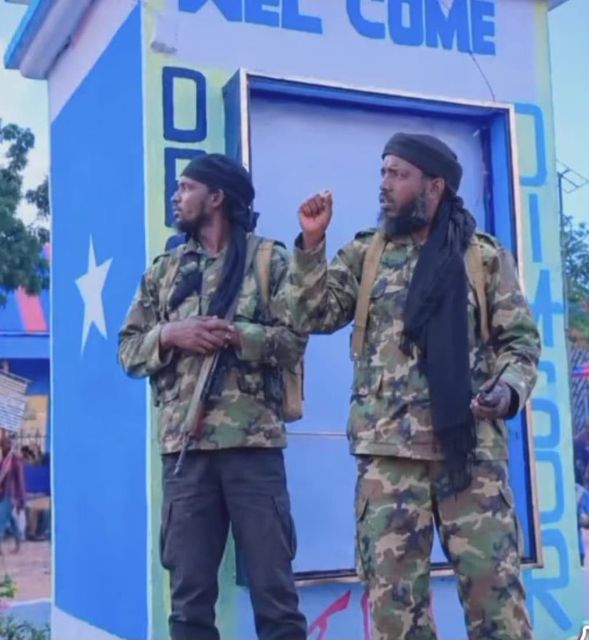
MOGADISHU — When fighters entered Diinsoor this month, they did not take just another town. They took one of the last islands of government presence in a sea of Al-Shabaab territory. According to a European Union asylum agency report, most of the southern half of Bay region had remained under Al-Shabaab control, with the environs of Diinsoor as the notable exception.
Now that exception is gone. And among the fighters who overran it, according to reports, was Hassan Yaqub Ali, one of Al-Shabaab’s most senior and hardline commanders.
A Commander Who Only Comes for Decisive Battles
Yaqub Ali is no field commander. He has served as Al-Shabaab’s governor of the Galgaduud region and as a member of the group’s leadership, and previously ran the Amniyat, its intelligence wing, in the Juba region. Commanders of his rank rarely expose themselves on the front line unless the group considers the operation strategically decisive. His reported presence in Diinsoor suggests Al-Shabaab sees the fall of Bay region in exactly those terms.
Ethiopia’s Zone, Al-Shabaab’s Victory
Diinsoor lies in Bay region, the heart of Ethiopia’s deployment in Somalia. The bulk of Ethiopian forces operate in South West State under AUSSOM’s Sector 3 command. Yet residents say Laftagareen-aligned forces entered Berdaale, Diinsoor and Awdiinle after government-aligned troops withdrew, with most of the advances taking place without major fighting.
A report by Red Sea Axis, citing local sources, claims Ethiopian forces deliberately withdrew from several key towns in Bay, facilitating their takeover by Al-Shabaab, and alleges that UAE-sourced money was used to bribe officers into abandoning their posts. South West State officials have called for an independent international investigation into the role of Ethiopian forces and foreign financial interference.
Laftagareen and Al-Shabaab: A Familiar Partnership
The forces advancing on Diinsoor were not Al-Shabaab alone. Militias loyal to former South West State president Laftagareen have led the push across Bay. Somali officials have repeatedly accused them of fighting alongside Al-Shabaab: after an August attack on Baidoa, the region’s security minister said Al-Shabaab fighters were found among the dead and others captured alive. Laftagareen’s camp denies any links.
Europe’s Money in Ethiopia’s Hands
The troops responsible for Bay region are not paid by Addis Ababa alone. In April, the EU approved €75 million for the AU mission, mainly to cover troop allowances, bringing Europe’s total contributions to AU operations in Somalia to nearly €2.8 billion since 2007.
That raises an uncomfortable question for Brussels: if a senior Al-Shabaab commander can reportedly walk into a town inside an Ethiopian zone of responsibility without a fight, what exactly is European money buying?
The Bigger Picture: Mogadishu and Ankara
Confidential sources describe the fall of Bay as part of a wider, UAE-financed campaign to confine the federal government to Mogadishu, with Israel providing intelligence and money channeled through Kenyan intermediaries. One of its central objectives, according to those sources, is to end Türkiye’s presence in Somalia.
Whether or not every element of that picture is confirmed, Diinsoor tells its own story. A town that held out against Al-Shabaab for years has fallen in days, in a zone guarded by Western-funded peacekeepers, with one of the group’s top commanders reportedly walking through its streets. For Somalia, that is not a setback. It is a warning.