Egypt, Sudan, Eritrea and Somalia Establish Four-Way Regional Coordination Mechanism
The four countries agreed in New Alamein to establish a follow-up mechanism for continued consultation on regional crises, with Somalia, Sudan, Red Sea governance and Nile water issues featuring prominently in their joint declaration.
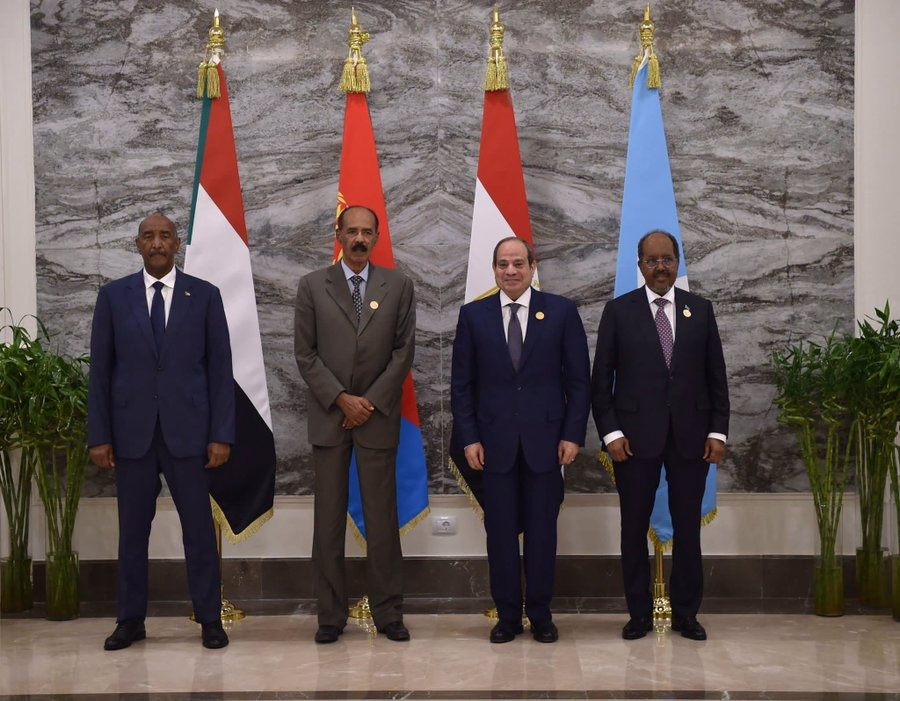
Egypt, Sudan, Eritrea and Somalia agreed to move toward more structured political and security coordination following their four-way summit in New Alamein. The leaders said a mechanism would be established to follow up on the summit’s outcomes, while future meetings would be held periodically or whenever circumstances require.
The declaration placed respect for sovereignty, independence and territorial integrity at the centre of regional stability. It rejected interference in the internal affairs of states and called for stronger national institutions and peaceful political solutions to regional disputes.
Four Leaders Reject Recognition of Somaliland
A major section of the declaration focused on Somalia. The four leaders reaffirmed the sovereignty and territorial integrity of the Federal Republic of Somalia and rejected any recognition or support for Somaliland that would undermine Somalia’s unity.
They also called for sustainable international financing for AUSSOM, arguing that adequate support is necessary for the mission to fulfil its mandate and facilitate an orderly transfer of security responsibilities to Somali forces.
On Sudan, the leaders backed national state institutions, rejected parallel entities and supported a political process owned and led by Sudanese actors.
Common Positions on the Red Sea and Nile
The declaration also set out a common position on the Red Sea, affirming freedom of navigation while stating that governance of the Red Sea should remain the exclusive responsibility of its littoral states.
Regarding the Nile and other transboundary rivers, the four countries stressed compliance with international law, the principle of causing no harm, prior notification, consultation and consensus. They also rejected unilateral measures that could affect the existing water uses of downstream Egypt and Sudan.
The agreement to institutionalise consultations gives the four countries a more permanent framework for coordinating on interconnected issues across the Horn of Africa, Red Sea and Nile Basin.