Ethiopia Opens Major Gold Refinery to Boost Export Value and Domestic Industry
Ethiopia has inaugurated a major precious metals refinery as part of a broader effort to transform its mining industry and increase the value generated from gold exports. Prime Minister Abiy Ahmed officially opened the facility in Addis Ababa, marking a new phase in the country's strategy to expand domestic mineral processing.
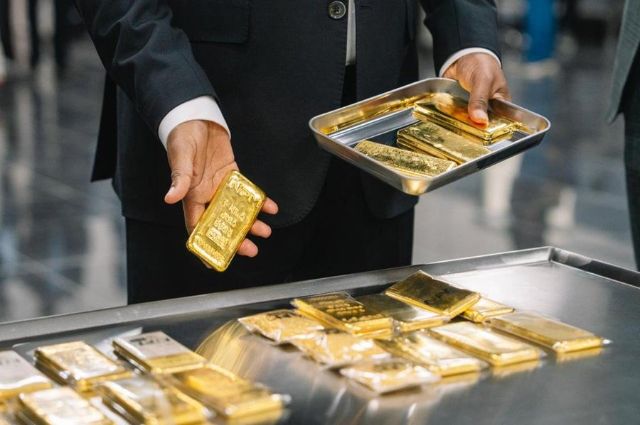
Ethiopia moves beyond raw gold exports
The National Precious Metals Refinery was inaugurated on October 10 at the Bole Lemi Special Economic Zone.
Developed through a partnership between Ethiopian Investment Holdings (EIH) and Sam Precious Metals, the facility is intended to strengthen Ethiopia's position in the precious metals industry.
The investment reflects the government's ambition to process more mineral resources domestically rather than relying heavily on the export of unrefined gold.
By expanding local refining capabilities, Ethiopia aims to retain a greater share of the economic value created along the gold supply chain.
Gold exports already generate billions
The refinery's inauguration comes amid significant growth in Ethiopia's mining industry.
According to figures previously released by the Ministry of Mines, the country produced approximately 44 tonnes of gold during the 2025/26 fiscal year.
Gold exports generated around $5.65 billion in revenue, while total foreign exchange earnings from the mining sector exceeded $5.7 billion.
The government expects domestic refining to support its wider strategy of increasing value-added exports and reducing dependence on external processing facilities.
Industrial development and skilled employment
Prime Minister Abiy Ahmed highlighted the refinery's potential contribution to industrial development, skilled job creation and the jewellery industry.
Authorities also expect the project to support greater transparency and competitiveness across Ethiopia's precious metals supply chain.
The facility has been designed with the capacity to process more than 600 tonnes of precious metals annually.
However, the announced capacity represents the refinery's processing potential, not the country's current gold production or confirmed annual throughput.
Mining becomes a key pillar of economic transformation
Ethiopia is seeking to diversify its economy by expanding mineral production, attracting investment and developing industries capable of producing higher-value exports.
The new refinery forms part of those efforts, with the government aiming to capture more economic value domestically and strengthen the country's participation in international metals markets.
Details of the facility's production ramp-up schedule and expected first-year output have not yet been disclosed.