Flag Dispute Sparks Fresh Moyale Violence, Threatening Trade Along Kenya–Ethiopia Border
An unresolved administrative boundary dispute between Ethiopia's Oromia and Somali regional states has triggered renewed violence in Moyale, affecting transport and commercial activity along the border with Kenya. The killing of a 13-year-old girl during an earlier confrontation sparked protests, while a subsequent decision to remove a disputed regional flag prompted further demonstrations. Buildings were reportedly torched in the Chamuq area on October 22.
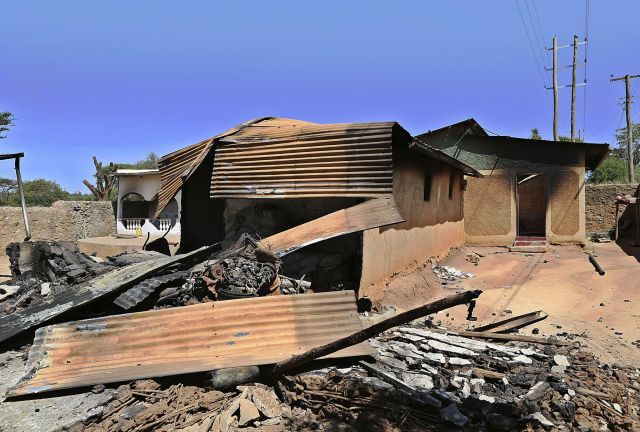
A dispute over administrative control in Ethiopia's southern borderlands has escalated into a security crisis affecting Moyale, a strategically important commercial gateway between Kenya and Ethiopia.
The latest violence reflects longstanding disagreements between communities linked to Ethiopia's Oromia and Somali regional states.
Although the immediate confrontation concerns local administrative authority, its effects extend into northern Kenya through disruptions to transport, business activity and cross-border movement.
Reports from October 22 indicated that buildings and shops had been set on fire around Chamuq during renewed clashes.
Several additional fatalities were feared, but an independently confirmed casualty toll was not available.
Administrative Office Becomes Symbol of Territorial Dispute
The dispute intensified following the opening of a Somali Regional State administration office in a contested part of Moyale.
The raising of the Somali regional flag prompted objections from residents who disputed the location's administrative status.
For communities living near the boundary between Oromia and the Somali Region, control of local government institutions has wider implications for political representation, security and access to public services.
The flag therefore became a visible symbol of a longstanding territorial and administrative disagreement.
Teenager's Death Escalates Political Tensions
On October 18, violence connected to the dispute resulted in the death of 13-year-old Diqqoo Jaataan Aagaa.
The incident reportedly involved Somali regional security personnel and armed groups on the Oromia side.
Witnesses offered conflicting accounts of the fatal shooting.
Some residents accused Somali regional police of firing directly at the girl, while others described her death as the result of crossfire.
No independent investigation has conclusively determined the circumstances.
Her death triggered demands for accountability and protests against the contested administrative arrangements.
Removal of Flag Fails to Restore Calm
Community elders and security officials held discussions as the demonstrations intensified.
On October 20, they reportedly agreed that the Somali regional flag should be removed from the disputed office.
The flag was taken down the following day.
However, the decision prompted opposition from some Somali residents, leading to further protests.
The renewed violence in Chamuq on October 22 demonstrated that removing the flag did not resolve the underlying disagreement over jurisdiction.
Disruption Spreads to Cross-Border Transport
The protests affected transport services connecting Moyale with Addis Ababa and Nairobi.
Passenger operations along both routes were reportedly interrupted on October 19 and 20.
Businesses and schools also faced closures in affected areas.
Moyale is an important transport and trading centre for communities on both sides of the international boundary.
Road disruptions can affect the movement of passengers, agricultural produce, livestock and commercial goods.
The full economic cost of the latest unrest has not yet been assessed.
Nagelle Borana–Moyale Road Faces Wider Insecurity
Local reporting has also highlighted longstanding insecurity on the approximately 350-kilometre Nagelle Borana–Moyale route.
Parts of the corridor have reportedly faced prolonged interruptions, with travellers and transport operators forced to consider alternative routes.
The route is an important connection between southern Ethiopia and the Moyale border crossing.
However, the current status of every section of the road has not been independently established.
Separate Disputes Have Also Affected Kenya's Moyale Area
The Kenyan side of the border experienced its own administrative and land-related protests earlier in 2026.
In May, disagreements between Marsabit and Wajir counties led to the suspension of a proposed security installation at a contested location.
Interior Cabinet Secretary Kipchumba Murkomen announced that construction would stop while authorities considered alternative arrangements.
In September, protests against community land registration in Golbo resulted in injuries to 12 police officers and four demonstrators, while 19 vehicles were damaged.
These were separate Kenyan incidents, not direct causes of the October Oromo–Somali confrontation.
Nevertheless, they highlight the wider sensitivity of land ownership, administrative boundaries and community representation in the Moyale region.
Peacebuilding Efforts Face Renewed Test
Despite recurring tensions, communities along the Kenya–Ethiopia border have participated in initiatives aimed at strengthening cooperation.
In August 2026, representatives of Borana, Gabra, Garre, Burji, Sakuya and Somali communities joined a cross-border camel caravan in Moyale.
The initiative included cultural activities, dialogue and a traditional peace ceremony intended to rebuild trust.
The October violence illustrates the continuing challenge of translating community-level reconciliation into lasting political and administrative arrangements.
Border Communities Await a Sustainable Settlement
The latest unrest demonstrates how unresolved local governance disputes can affect wider regional economic and security conditions.
The immediate priorities include protecting civilians, establishing the circumstances surrounding the reported deaths and preventing further destruction of property.
Longer-term stability will depend on addressing competing administrative claims and creating mechanisms for resolving disputes without violence.
Until those issues are addressed, insecurity in Moyale could continue disrupting everyday life on both sides of the Kenya–Ethiopia border.