Abiy Ahmed's Peace Message Amid Regional Tensions
Ethiopian Prime Minister Abiy Ahmed outlined his government's economic performance, defence modernization and infrastructure development during a parliamentary session on November 26, 2026. His remarks came amid escalating tensions with Eritrea, Sudan's accusations that Ethiopia supports the Rapid Support Forces (RSF), and allegations by Somalia's parliamentary speaker linking Ethiopia to cooperation with Al-Shabaab. Addis Ababa's latest Sudan peace proposal was also rejected by the Sudanese government.
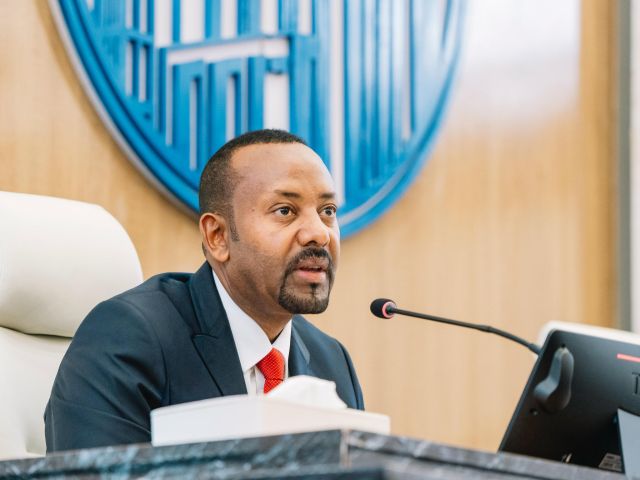
Abiy Ahmed addresses Ethiopia's parliament
Ethiopian Prime Minister Abiy Ahmed appeared before the House of Peoples' Representatives in Addis Ababa on November 26, 2026, to respond to lawmakers' questions and present the government's performance.
The session was the fourth regular meeting of the first year of the seventh parliamentary term.
Discussions covered economic reforms, national defence, export earnings, financial digitalization, infrastructure development and regional security.
Lawmakers also raised questions about relations with Eritrea, armed groups, Red Sea access and the government's strategy for addressing internal and external security threats.
Abiy emphasized the importance of strengthening Ethiopia's economic foundations while developing an effective and technologically advanced military.
However, the session took place against a background of worsening regional relations and competing accusations involving several neighboring countries.
Sudan rejects Ethiopia's peace initiative
Two days before the parliamentary session, Abiy launched a diplomatic initiative aimed at ending Sudan's war.
On November 24, he invited Sudan's military, political and civilian parties to participate in inclusive national dialogue hosted and facilitated by Ethiopia.
The proposal called for ending hostilities, creating conditions for negotiations and establishing a broadly accepted national unity government.
Abiy said Ethiopia had no intention of supporting one Sudanese party against another and that the country's future should be determined by its own people.
He described Sudan's peace and security as inseparable from Ethiopia's stability and the wider security of the Horn of Africa.
The Sudanese government, however, rejected the initiative on November 25.
Khartoum said Ethiopia did not meet the neutrality requirements necessary to host or facilitate negotiations.
Khartoum accuses Ethiopia of supporting the RSF
Sudan's government accused Addis Ababa of supporting the Rapid Support Forces, providing training facilities to its fighters and allowing drone attacks to be launched from Ethiopian territory.
Sudanese authorities linked their concerns particularly to military developments in Blue Nile, where the army has been fighting RSF forces and their allies.
Khartoum called for an independent investigation into the alleged cross-border drone operations and insisted that any mediation must respect Sudanese sovereignty.
The government also urged the African Union and international partners to exclude Ethiopia from arrangements to host peace negotiations under the current circumstances.
By contrast, the RSF-linked Tasis administration and the civilian Sumoud coalition welcomed the Ethiopian initiative.
The divergent responses highlighted continuing disagreements over Ethiopia's proposed mediation role.
Addis Ababa maintains that its peace initiative is intended to support an inclusive Sudanese-led settlement.
Somali parliament speaker accuses Ethiopia of Al-Shabaab links
Ethiopia also faced serious criticism from a senior Somali official in the days preceding Abiy's parliamentary appearance.
On November 23, Somalia's Speaker of the House of the People, Abdulkadir Mohamed Nur, accused Ethiopia, Kenya and Uganda of collaborating with Al-Shabaab.
Nur, also known as Jaamac, made the allegations during a conference in Mogadishu.
He warned that external actors were attempting to undermine Somalia's security institutions and weaken the authority of the federal government.
The Speaker portrayed armed networks, foreign interests and political actors as interconnected threats to Somalia's sovereignty.
He had previously questioned why Al-Shabaab remained active in areas where Ethiopian troops serving in African Union security operations were deployed.
The allegations were made publicly by Somalia's parliamentary speaker, but independently established evidence demonstrating direct Ethiopian government support for Al-Shabaab was not presented in the reported speech.
Ethiopia has also participated for years in military operations against Al-Shabaab through bilateral deployments and African Union-led security missions.
Diplomatic engagement with Somalia continues
The accusations came despite ongoing diplomatic contact between Addis Ababa and Mogadishu.
Relations between the two countries deteriorated in 2024 following Ethiopia's agreement with Somaliland over access to the sea.
Somalia rejected arrangements involving Somaliland without federal government consent, arguing that they violated its sovereignty.
Türkiye subsequently facilitated diplomatic negotiations intended to ease the dispute.
On November 11, 2026, Abiy Ahmed met Somali President Hassan Sheikh Mohamud in Antalya, Türkiye, ahead of the COP31 Leaders' Summit.
According to Ethiopia's official account, the two leaders discussed security developments in Somalia and the importance of continued dialogue and regional cooperation.
The meeting demonstrated that bilateral diplomatic engagement was continuing, although Somalia's parliamentary speaker later raised serious allegations about Ethiopian involvement in the country's security affairs.
Eritrea disputes Ethiopia's regional policies
Relations with Eritrea were another major subject of the parliamentary session.
Ethiopian lawmakers questioned the government about alleged Eritrean support for armed groups operating against the federal authorities.
Addis Ababa has repeatedly accused Asmara of providing financial, logistical and military support to Ethiopian opposition forces.
In September, Ethiopian military chief General Birhanu Jula accused Eritrea, Sudan and Egypt of supporting armed groups involved in fighting in northern Ethiopia.
Eritrea rejected the accusations and criticized Ethiopia's pursuit of access to the Red Sea.
Asmara maintains that Ethiopia's rhetoric and security policies threaten Eritrean sovereignty and territorial integrity.
The tensions represent a significant reversal from the diplomatic rapprochement that began in 2018.
Relations deteriorated again following the Tigray conflict and disputes over the implementation of peace arrangements and access to strategic maritime routes.
Abiy previously warned Eritrea of serious consequences
In October, Abiy warned the Eritrean government against providing support to forces he described as hostile to Ethiopia.
He urged Asmara to pursue peaceful coexistence and economic cooperation rather than backing armed groups.
The Prime Minister also warned that continued support for Ethiopia's adversaries could result in severe consequences.
Eritrean officials, however, accused Addis Ababa of escalating tensions through its demands concerning Red Sea access.
Military movements along parts of the Ethiopia-Eritrea frontier have heightened regional concerns about a possible wider conflict.
The two governments continue to present sharply different explanations of the crisis.
Defence strategy built on three pillars
Addressing questions about national defence, Abiy argued that military strength cannot be sustained without a strong economy.
He compared the national defence system to a house that requires several supporting pillars to remain standing.
According to the Prime Minister, Ethiopia's defence strategy rests on three main components: air capabilities, ground forces and technology.
He said the government was developing a military institution capable of effectively using modern technology.
Abiy also argued that the country's defence modernization efforts were already producing tangible results.
Lawmakers had raised questions about strategic deterrence, air defence systems, military technology, intelligence capabilities and the domestic defence industry.
The available excerpts of the address did not announce a new specific military operation or weapons procurement agreement.
Prime Minister emphasizes national resilience
Abiy also highlighted Ethiopia's historical ability to overcome political and military challenges.
He said the country had survived centuries of hardship through organized armies, national solidarity and the sacrifices of previous generations.
The Prime Minister connected national security with institutional development, economic strength and technological capacity.
His comments came as Ethiopia continued to face armed conflict in several regions and tensions along its northern borders.
Ethiopia's economy reaches $210 billion
Abiy announced that Ethiopia's economy had reached approximately $210 billion following a revision of national economic accounts.
He said the rebasing exercise had incorporated economic activities that were not fully reflected in previous measurements.
The Prime Minister highlighted developments in digital services, industrial production, agriculture and other sectors.
According to figures presented during his address, industry accounted for 31.8% of GDP, compared with agriculture's 31.4%.
Abiy presented the sectoral figures as evidence of structural economic transformation.
The updated figures reflect the government's revised national accounting methodology.
Exports generate $3.1 billion in three months
The Prime Minister said Ethiopia had earned $3.1 billion in export revenue during the previous three months.
According to Abiy, the figure represented a 25% increase compared with the corresponding period a year earlier.
He said the three-month total was comparable to annual export earnings recorded in some years before the national reform program.
Abiy attributed the improvement to increased productive capacity and the removal of barriers that previously constrained export activity.
The government is seeking to expand foreign currency earnings and strengthen the country's external trade performance.
Digital finance transactions reach 11 trillion birr
Abiy also presented new figures on Ethiopia's banking and digital finance sectors.
He said total bank deposits had reached 5.3 trillion birr.
The number of mobile banking users had increased to approximately 70 million, while the value of digital financial transactions had reached 11 trillion birr.
The Prime Minister described digital banking as a major contributor to expanding access to financial services.
He said the wider use of electronic transactions had strengthened the financial system and improved opportunities for citizens to use formal banking services.
Ethio-Djibouti Railway expands operations
Transport infrastructure featured prominently in the Prime Minister's address.
Abiy said the Ethio-Djibouti Railway Corporation had increased its reported earnings from 3.4 billion birr to 43 billion birr.
The company had also expanded its locomotive fleet from 11 to 36 and developed the capacity to manage more than 1,000 wagons.
Passenger traffic increased from 198,000 to 588,000, while freight transport reached 4.3 million tons.
Abiy said the railway now handles at least 95% of Ethiopia's coffee exports and approximately 25% of its fertilizer imports.
He also announced that nearly 100 kilometers of new railway infrastructure were being developed using domestic capacity.
The exact financial periods covered by the reported increase in railway earnings were not specified in the published remarks.
Peace rhetoric faces regional security challenges
Abiy Ahmed's parliamentary address underscored the government's efforts to expand economic output and strengthen national defence.
However, Ethiopia's diplomatic relations remain complicated by armed conflicts and security disputes across the Horn of Africa.
Sudan's government has accused Addis Ababa of supporting the RSF and rejected its peace initiative, while Somalia's parliamentary speaker has publicly accused Ethiopia of links with Al-Shabaab.
Eritrea, meanwhile, argues that Ethiopia's Red Sea ambitions and military posture threaten its sovereignty.
Ethiopia rejects the characterization of its regional policies as destabilizing and has itself accused Eritrea and Sudan of supporting armed groups operating within Ethiopian territory.
These competing claims illustrate the gap between regional diplomatic initiatives and the unresolved security disputes involving Ethiopia and its neighbors.
The government's future policies will be closely watched as it pursues economic reforms and military modernization while attempting to manage its increasingly complex regional relationships.