Abiy Ahmed Welcomes Africa's Health Leaders to Ethiopia
Ethiopian Prime Minister Abiy Ahmed has welcomed African leaders and international health partners to Addis Ababa for the Fifth International Conference on Public Health in Africa (CPHIA 2026), taking place from November 23 to 27. Co-hosted by Ethiopia and the Africa Centres for Disease Control and Prevention (Africa CDC), the conference is expected to attract more than 30,000 participants. Discussions will focus on health sovereignty, vaccine manufacturing, sustainable financing, pandemic preparedness and strengthening African ownership of public health systems.
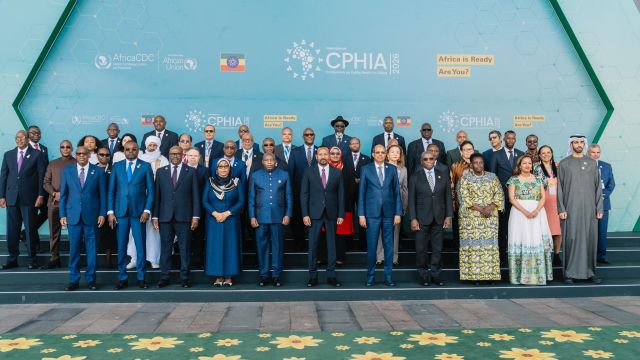
Ethiopia's capital, Addis Ababa, has become the center of continental health diplomacy as the Fifth International Conference on Public Health in Africa (CPHIA 2026) begins on Monday, November 23, 2026.
Co-hosted by the Government of Ethiopia and the Africa Centres for Disease Control and Prevention (Africa CDC), the five-day gathering brings together African heads of state, government officials, public health professionals, researchers, innovators and international development partners.
The event is being held at the Addis International Convention Center and will continue until November 27.
Organizers expect more than 30,000 participants, including delegates attending in person and virtually.
The conference is convened under the theme "Africa's Health Security and Sovereignty: Transformation from Health Dependency and Vulnerability to Ownership and Resilience."
Its central objective is to examine how African countries can reduce dependence on external assistance, develop stronger domestic health institutions and build the capacity to respond independently and collectively to public health challenges.
Prime Minister Abiy Ahmed welcomes African and global delegates
Ahead of the conference, Ethiopian Prime Minister Abiy Ahmed released a video message inviting African leaders, researchers, public health professionals and international partners to Addis Ababa.
In the message published on November 20, Abiy described Ethiopia's role as host as an opportunity to strengthen cooperation and accelerate Africa-led solutions to the continent's health challenges.
He emphasized the importance of turning shared ambitions into concrete action through stronger partnerships, institutional development and collective responsibility.
The Prime Minister called for the creation of a healthier and more resilient Africa capable of addressing emerging public health challenges.
His message concluded with the declaration, "Africa is ready!"
Abiy is also listed among the keynote speakers in the conference's official opening program.
African presidents and senior officials gather in Addis Ababa
The opening day's program includes Ethiopian Prime Minister Abiy Ahmed, Burundi President and African Union Chairperson Évariste Ndayishimiye, African Union Commission Chairperson Mahmoud Ali Youssouf and Africa CDC Director-General Dr. Jean Kaseya.
Tanzanian President Samia Suluhu Hassan arrived in Addis Ababa on November 22 to participate in the conference and related African Union health initiatives.
Uganda's Vice President Jessica Alupo is representing President Yoweri Museveni at the gathering.
The conference's official speaker list also includes Somalia's Minister of Health and Human Services Ali Haji Adam Abubakar, Sudan's Health Minister Haitham Mohammed Ibrahim and World Health Organization Regional Director for Africa Mohamed Yakub Janabi.
The participation of senior political and health leaders reflects the conference's ambition to connect scientific evidence with political decisions and investment priorities.
African Union prepares 2026–2030 maternal and child health roadmap
One of the major initiatives scheduled for the opening day is the high-level launch of the African Union Champions' Roadmap on Reproductive, Maternal, Newborn, Child and Adolescent Health for 2026–2030.
Tanzanian President Samia Suluhu Hassan, who serves as the African Union Champion for Maternal, Newborn and Child Health, is taking a leading role in presenting the continental framework.
The initiative focuses on reducing preventable maternal and newborn deaths, ensuring access to skilled birth attendants and improving childhood immunization coverage.
The five-year roadmap also aims to strengthen domestic and international financing for essential health services.
The program is expected to support African Union member states in expanding healthcare access for women, children and adolescents, particularly in underserved communities.
Africa targets 60 percent local vaccine production by 2040
Reducing Africa's dependence on imported vaccines and medicines is a major focus of CPHIA 2026.
Africa CDC has identified a long-term objective of producing 60 percent of the continent's vaccine requirements locally by 2040.
Achieving this target will require investment in pharmaceutical manufacturing, biotechnology, research institutions, skilled professionals and regulatory cooperation.
The conference will explore how African governments can strengthen regional production networks and coordinate the procurement of essential medical products.
The experience of the COVID-19 pandemic, during which many African countries faced significant vaccine supply challenges, continues to shape the continent's health sovereignty agenda.
Local manufacturing is therefore being discussed not only as an industrial development opportunity but also as an essential component of public health security.
Health financing challenges intensify across the continent
Financial sustainability is another central issue on the conference agenda.
In an assessment published on November 17, Africa CDC highlighted projections that external health assistance to Africa would decline by approximately 70 percent between 2021 and 2025.
The institution also emphasized the growing pressure of debt servicing on national budgets.
Under the 2001 Abuja Declaration, African governments committed to allocating at least 15 percent of their national budgets to health.
However, Africa CDC has reported that only a limited number of countries have achieved that benchmark and that many governments continue to allocate less than 10 percent of their budgets to the health sector.
CPHIA 2026 will examine options for increasing domestic resources, mobilizing private investment and developing predictable financing mechanisms.
Discussions will also focus on how African countries can protect essential health services while international assistance becomes increasingly uncertain.
Strengthening preparedness against emerging health threats
The rising frequency of public health emergencies across Africa has reinforced the importance of stronger disease surveillance and emergency response systems.
According to Africa CDC, the number of public health emergencies reported on the continent increased from 152 in 2022 to 213 in 2024.
These developments have created additional pressure on health systems already affected by limited resources, workforce shortages and infrastructure gaps.
The conference will explore improvements in laboratory capacity, genomic surveillance, early-warning systems and cross-border information sharing.
Participants will also examine how stronger national public health institutions can improve coordination during disease outbreaks.
The broader objective is to develop systems capable of detecting emerging health threats quickly and responding before local outbreaks develop into wider emergencies.
Digital health and artificial intelligence enter the agenda
Digital transformation is another major component of the scientific program.
Sessions will examine the potential use of artificial intelligence, digital health records, data management systems and advanced technologies to improve healthcare delivery.
The discussions will also address data sovereignty and the importance of protecting national health information.
Africa CDC considers digital tools an important opportunity to strengthen disease monitoring, improve healthcare planning and support decision-making.
Climate-related health threats will receive attention, particularly in relation to extreme weather, emerging disease patterns and the resilience of healthcare infrastructure.
WHO leadership candidates to engage with African ministers
A ministerial dialogue involving candidates for the position of Director-General of the World Health Organization is scheduled for the afternoon of November 23.
The session will provide an opportunity for African health leaders to discuss global health governance and the future priorities of the international health system.
The official program includes candidates and senior representatives from global and continental health institutions.
The discussions are expected to address Africa's role in shaping international health decisions and strengthening the representation of African priorities within global institutions.
Youth and women play central roles in pre-conference events
Preparatory activities began on November 22 with the Youth Pre-Conference and Women in Health Leadership Summit at the African Union Commission headquarters in Addis Ababa.
Africa CDC had targeted participation from approximately 4,000 young people and 200 women leaders.
The program emphasized leadership development, professional mentorship, employment opportunities and the participation of women and young professionals in public health decision-making.
Recommendations from the pre-conference activities are intended to contribute to the broader CPHIA 2026 discussions.
Five-day conference to shape Africa's health priorities
The conference program continues on November 24 with discussions on global health governance, immunization, pharmaceutical manufacturing and financing.
November 25 will focus on domestic health financing, local manufacturing, procurement cooperation and the role of African cities in strengthening healthcare systems.
Digital health, artificial intelligence, climate resilience and public health preparedness will dominate the November 26 agenda.
The final day, November 27, will address African-led research, innovation and the future of primary healthcare before the official closing ceremony.
The gathering is expected to create opportunities for partnerships and initiatives aimed at translating continental health commitments into practical programs.
As Ethiopia hosts the conference, Prime Minister Abiy Ahmed's call for collective action places the broader goal of African health sovereignty at the center of discussions involving political leaders, scientists and international partners.