Amnesty Demands War Crimes Probe Into Tigray Shelling
Amnesty International has called for a war crimes investigation into artillery attacks on residential neighborhoods in Alamata, southern Tigray, during fighting between Ethiopian government forces and Tigrayan armed groups in September 2026. The organization independently documented 14 civilian deaths and also criticized TPLF-affiliated forces for positioning military assets in civilian areas, including schools.
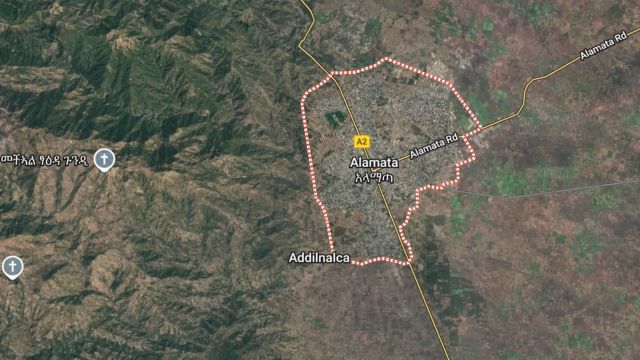
Amnesty calls for investigation into Alamata attacks
Amnesty International has urged an independent investigation into artillery attacks carried out by the Ethiopian National Defense Forces (ENDF) and their allied Tigray Peace Forces (TPF) during the September battle for Alamata.
The findings were published by the human rights organization on November 23 and reported by Reuters on November 24, 2026.
According to Amnesty, government forces and their allies repeatedly struck populated areas of Alamata between September 26 and 28.
The organization examined four incidents and independently confirmed the deaths of 14 civilians, including children.
The attacks also caused numerous injuries and damaged residential properties in a city with an estimated population of 80,000.
Amnesty said the use of wide-area explosive weapons in crowded civilian neighborhoods raised serious concerns under international humanitarian law.
Investigation examines videos and satellite imagery
The human rights organization's findings were based on interviews with 28 people, including witnesses, survivors, relatives of victims, medical workers and humanitarian personnel.
Its Evidence Lab examined eight videos, 17 photographs, satellite imagery and other publicly available material.
Investigators identified the Waja Ena Tumuga area, approximately 13 kilometers south of Alamata, as a principal location from which artillery fire was directed toward the city.
Witness accounts and information about troop movements linked the offensive to Ethiopian federal forces and the pro-government TPF.
The research also examined the possible presence of TPLF fighters and military positions within populated areas.
Seven civilians killed in Kebele 04
One of the deadliest attacks occurred on the morning of September 27 in the densely populated Kebele 04 neighborhood.
Artillery struck five residential houses, killing seven civilians and injuring four others.
Among the victims were 26-year-old Meron Sewasew, her eight-year-old son Markon Girmahiwot and her brother Tewekel Sewasew, aged 33.
Four members of another family were also killed in the same attack.
Amnesty established that the affected homes were located approximately 150 meters from the Werknesh Hotel.
Several witnesses said TPLF fighters had previously used the hotel, but the organization could not establish whether fighters were present there when the artillery struck.
Investigators emphasized that the possible presence of military personnel nearby would not remove the attacking forces' legal obligations to protect civilians.
Additional attacks hit homes and a commercial area
Other incidents investigated by Amnesty occurred in different parts of Alamata.
On September 26, artillery hit the Nigus Shimoy establishment near a busy market, killing at least three people.
The attack occurred as residents were preparing for the Demera celebrations associated with the Ethiopian Orthodox Meskel holiday.
On September 27, artillery struck a house in Kebele 02, killing 55-year-old Deyima Rebso and severely injuring her husband, Ararse Yasin, aged 62.
Other members of the family, including their children and a 10-year-old grandchild, were also injured.
Another strike in the Missionary Camp neighborhood on September 26 killed three civilians and injured four others.
Amnesty said some witnesses reported no military activity in the immediate vicinity of the affected civilian locations.
TPLF accused of endangering civilians
The report also criticized TPLF-affiliated forces for operating from populated neighborhoods and using schools for military purposes.
Witnesses told researchers that several educational facilities in Alamata had been occupied or used by fighters before the renewed hostilities.
Among the locations examined were Biruh Tesfa School and Alamata Preparatory School.
Satellite imagery reviewed by Amnesty showed evidence of burning near Alamata Preparatory School following a reported drone strike on September 22.
However, the available imagery did not conclusively establish every aspect of the alleged military activity.
The organization stated that all parties must avoid placing military objectives in densely populated locations whenever feasible and take precautions to protect civilians.
It also emphasized that alleged violations by TPLF-affiliated forces could not justify indiscriminate artillery attacks by government troops or their allies.
Ethiopian military, TPF and TPLF respond differently
Amnesty International requested information from the ENDF, TPF and TPLF on October 27.
It subsequently shared its investigative findings with the Ethiopian military and the TPF on November 17.
The organization said neither had submitted a formal response by the time its findings were published.
A TPF spokesperson separately told Reuters that the group's fighters had not been deployed on the front lines during the Alamata battle.
The TPLF sent Amnesty a four-page letter dated November 18 rejecting the accusations against its forces.
The group called for an additional independent and impartial investigation before responsibility was assigned.
UN investigation urged
Amnesty International called on the United Nations Human Rights Council to establish an independent mechanism to investigate serious violations committed during Ethiopia's renewed conflicts.
Yasmine Ahmed, the organization's senior director responsible for regional human rights impact, warned that the failure to hold perpetrators accountable for previous abuses had contributed to continued violence against civilians.
The organization also urged Ethiopian authorities to allow independent human rights monitors, journalists and humanitarian organizations unrestricted access to conflict-affected areas.
Federal forces captured Alamata and Mekelle
Alamata became a major battlefield during the renewed conflict that erupted in September 2026.
Located in southern Tigray, the city serves as an important transportation and supply center for military equipment, food and fuel.
Government forces and their TPF allies captured Alamata on September 28.
Less than a week later, Ethiopian forces took control of Mekelle, the regional capital.
Although federal troops subsequently controlled major urban centers across Tigray, armed resistance continued in other areas.
Eritrea border tensions add to fears of escalation
The Amnesty findings come as tensions between Ethiopia and neighboring Eritrea continue to rise.
Reuters reported on November 18 that Ethiopian and Eritrean forces had been building up their military presence along the shared border.
Conflict monitors raised concerns about military activity around Badme and the possibility of renewed interstate fighting.
The previous Tigray war, which lasted from 2020 to 2022, resulted in approximately 600,000 deaths according to an African Union estimate.
There is still no comprehensive assessment of the total human toll from the renewed conflict in 2026.
The latest investigation into Alamata highlights the continuing dangers facing civilians as military operations expand and demands for accountability grow.