Benghazi Naval Base Blasts Raise Arms Shipment Questions
Powerful explosions rocked a naval base in Benghazi, eastern Libya, before dawn on November 22, triggering a major fire at an ammunition depot and raising questions about military shipments passing through the strategic port. While emergency authorities confirmed that the blaze was brought under control, reports of aircraft over the area and speculation involving Russian military cargo, the United Arab Emirates and Sudan's Rapid Support Forces have brought renewed scrutiny to the incident.
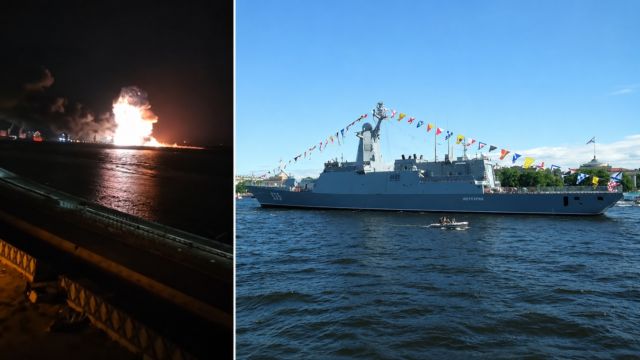
A series of powerful explosions struck the naval base and port area of Benghazi, eastern Libya, in the early hours of Sunday, November 22, 2026, sending flames and thick smoke into the sky and alarming residents across the coastal city.
Local emergency authorities confirmed that ammunition had exploded inside a storage facility at the Benghazi naval base.
Firefighters, civil defense personnel and maritime rescue teams were deployed to the military installation, eventually bringing the resulting fire under control.
The incident attracted widespread attention after videos circulated on social media showing flames rising from the port area, while witnesses described hearing explosions and sounds resembling anti-aircraft fire.
The events have also prompted questions about the possible presence of military cargo at the port and the role of Benghazi in regional arms transportation networks.
Powerful explosions shake the naval base
Tawfiq al-Shamekh, director of relations and information at the National Safety Authority in eastern Libya, confirmed that emergency teams responded to an ammunition explosion inside the naval base.
Speaking to the Benghazi-based Al Wasat newspaper, Al-Shamekh said the fire had been extinguished and the situation brought under control.
He explained that the precise cause of the explosion would be determined following an examination by technical specialists.
Residents were urged to avoid gathering near the military installation while safety personnel completed their operations.
Witnesses told local media that a powerful explosion was heard from the direction of the naval base, followed by flames that remained visible for approximately an hour and a half.
Some residents described hearing three major explosions, while others reported seeing debris and thick smoke rising above the port.
Emergency vehicles were subsequently seen moving toward the naval installation.
Questions emerge over possible aerial activity
The explosions were accompanied by reports of aircraft movements over Benghazi and sounds associated with ground-based anti-aircraft weapons.
Libyan news platform Ean Libya reported that some residents had observed aircraft in the vicinity of the port before or around the time of the explosions.
Other local accounts suggested that a vessel carrying ammunition might have been targeted while docked at the port.
Videos shared online showed intense flames and smoke rising from the military facility, contributing to speculation about a possible aerial attack.
However, the identity of any aircraft operating in the area has not been established, and no vessel has been publicly identified as the confirmed target of an attack.
No detailed technical report establishing that an external strike caused the ammunition explosion has been released.
UAE and Sudan's RSF enter the discussion
Another major issue surrounding the Benghazi incident concerns the movement of military cargo through eastern Libya and its potential connection to the war in neighboring Sudan.
Some accounts circulated by Libyan media and social media users described a vessel carrying ammunition allegedly intended for Sudan's Rapid Support Forces (RSF), led by Mohamed Hamdan Dagalo, commonly known as Hemedti.
Those accounts suggested that the cargo had links to the United Arab Emirates and was to be transferred through Libya before reaching Sudan.
No shipping manifest, independently established vessel identity or official cargo record has been released connecting such a shipment to the November 22 explosion.
Nevertheless, the discussion has revived scrutiny of previously documented arms transportation routes through Libyan ports.
In September 2025, Italian newspaper Il Foglio published an investigation into the Panama-flagged cargo vessel Aya 1, which had departed from Jebel Ali in the United Arab Emirates.
The investigation described shipments of military vehicles and ammunition transported toward Libya and examined information suggesting that some equipment was ultimately intended for Sudan's RSF.
The vessel had attracted attention from European authorities involved in Operation IRINI, the European Union naval mission responsible for monitoring the United Nations arms embargo on Libya.
Those earlier findings provide context for concerns about arms trafficking through the region, but they do not establish a connection between the Aya 1 shipment and the latest Benghazi explosion.
The United Arab Emirates has consistently denied accusations that it provides military support to Sudan's Rapid Support Forces.
Russian military cargo and Ukrainian involvement discussed
The explosions have also drawn attention to Russia's military presence in eastern Libya.
Italian news agency Agenzia Nova reported that sources in Benghazi had raised the possibility of a strike targeting a Russian military vessel or weapons cargo associated with Moscow.
The agency also described discussions involving possible Ukrainian involvement, given the wider confrontation between Russia and Ukraine and Moscow's use of military infrastructure in Libya.
Russian personnel and military equipment have maintained a presence in areas controlled by forces aligned with Khalifa Haftar, including strategically important installations in eastern and central Libya.
Military facilities in the region form part of broader logistical networks linking Russia's activities across the Mediterranean and Africa.
Agenzia Nova also reported flight-tracking information indicating that a Russian Ilyushin Il-76 aircraft arrived in Benghazi on the morning of November 22.
The flight's reported arrival does not, by itself, establish a connection to the explosions.
No identified Russian vessel, documented damage assessment or statement accepting responsibility has been presented to establish that Ukraine carried out an operation at the port.
Algerian president's security warning draws attention
The Benghazi incident also prompted renewed discussion of recent statements by Algerian President Abdelmadjid Tebboune concerning cross-border security threats.
Speaking during the opening of Algeria's 2026–2027 judicial year on November 15, Tebboune warned that his country might take measures against the sources of drug production threatening its national security.
He described attempts to flood Algeria with narcotics as a serious threat to the country's population and emphasized the right to self-defense.
The president also said Algeria would protect its territory and neighboring countries through the strength of its armed forces.
His remarks did not identify Benghazi, the Libyan naval base or any specific military installation as a target.
Although the timing of those comments has generated discussion, the available information does not establish an operational connection between Algeria and the November 22 incident.
Libyan media authority describes incident as accidental
Following the explosions, the Libyan Media Corporation issued a statement describing the incident at the Benghazi naval base as accidental.
The organization said security and emergency teams had responded quickly and efficiently, bringing the situation under control.
It also criticized information circulated through some media outlets and social platforms, emphasizing the need for accuracy when reporting security-related incidents.
The statement followed earlier confirmation from the National Safety Authority that an ammunition depot had exploded inside the naval installation.
At the same time, emergency officials indicated that the technical investigation into the cause of the explosion was still pending.
No definitive official casualty figures or comprehensive assessment of material losses had been released.
Benghazi's strategic role under Khalifa Haftar
Benghazi remains one of the most important military, political and logistical centers in eastern Libya, an area controlled by forces aligned with Khalifa Haftar.
Its naval and aviation facilities support regional transportation and military logistics, while the city's commercial infrastructure plays a significant role in the economy of eastern Libya.
Despite the October 2020 ceasefire, Libya remains politically divided.
The internationally recognized Government of National Unity, headed by Prime Minister Abdulhamid Dbeibah, operates from Tripoli, while an eastern administration led by Osama Hammad is supported by the House of Representatives and operates in territory under Haftar's influence.
The latest incident has brought renewed attention to the security of military installations, ammunition storage facilities and maritime supply routes.
Oil infrastructure disruptions deepen Libya's challenges
The Benghazi explosions coincided with another major development affecting Libya's critical infrastructure.
The National Oil Corporation announced that the closure of the Hamada oil pipeline by an armed group for more than 20 days had caused losses of approximately 302,778 barrels of crude oil.
The financial impact was estimated at $30.79 million.
The disruption affected operations associated with the Hamada and Dhahra oilfields, adding to concerns over the vulnerability of Libya's energy infrastructure.
Although the pipeline closure and the Benghazi naval base incident were separate events, both highlighted the continuing security challenges facing the country's strategic assets.
The Benghazi incident remains the subject of public scrutiny, particularly regarding the origin of the explosion, the reported aerial activity and the identity of any military cargo present at the port.
Further technical findings and detailed statements from the military authorities will be essential to establishing the full circumstances of the explosions.