Djibouti and Libya Expand Visa and Diplomatic Cooperation
Djibouti and Libya have established a new framework for diplomatic cooperation through three memorandums signed in Tripoli on November 6. The agreements introduce reciprocal visa exemptions for diplomatic, special and service passport holders, establish political consultations between their foreign ministries and promote cooperation in diplomatic education. The signing took place during Djibouti's participation in preparations for the 22nd CEN-SAD Executive Council meeting in Libya.
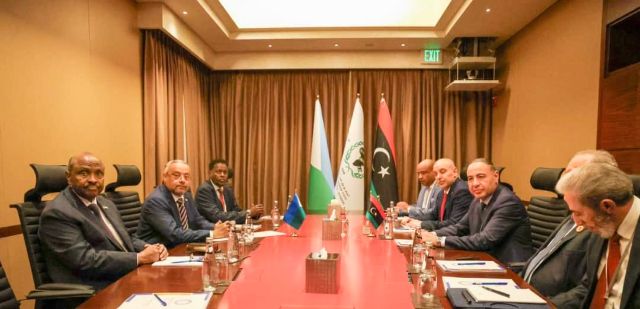
Djibouti and Libya have taken steps to strengthen their diplomatic relationship with the signing of three agreements designed to improve official travel, political coordination and professional cooperation between their foreign ministries.
The memorandums were signed on Friday, November 6, in Tripoli by Djibouti's Minister of Foreign Affairs and International Cooperation and Government Spokesperson, Abdoulkader Houssein Omar, and Libya's Acting Minister of Foreign Affairs and International Cooperation, Al-Taher Salem Al-Baour.
The signing followed bilateral discussions on strengthening institutional relations, expanding cooperation and improving communication on regional and international matters.
The agreements come as Libya hosts a series of high-level African diplomatic meetings linked to the Community of Sahel-Saharan States (CEN-SAD).
Official Travel to Become Easier Under Visa Agreement
The first memorandum introduces reciprocal visa exemptions for holders of diplomatic, special and service passports.
The arrangement is intended to reduce travel requirements for eligible government officials and diplomatic representatives visiting either country.
The measure could facilitate official delegations, institutional meetings and other government-related exchanges between Djibouti and Libya.
Unlike a general visa-free travel agreement, the exemption applies to specified categories of official passports rather than all citizens.
The two governments have not announced when the arrangement will become operational or provided further details about the permitted duration of visits and implementation procedures.
The agreement therefore establishes the intended framework for reciprocal visa facilitation, with practical arrangements still to be clarified.
New Mechanism for Foreign Policy Consultations
A second memorandum focuses on political consultations between Djibouti's and Libya's foreign ministries.
The arrangement is intended to establish closer communication and coordination on matters of shared diplomatic interest.
It provides a framework for the two countries to exchange views on bilateral relations, developments across Africa and issues arising within international organizations.
During their meeting, the two ministers also discussed diplomatic coordination ahead of the CEN-SAD Executive Council session.
The consultation framework is particularly relevant to the countries' participation in regional institutions, where opportunities arise to coordinate positions and examine common policy concerns.
The agreement does not announce a new political alliance or require the two governments to adopt identical positions on international issues.
Instead, it formalizes their intention to maintain closer contact and develop institutional dialogue.
Diplomatic Institutes to Strengthen Professional Cooperation
The third memorandum concerns cooperation between the diplomatic institutes of Djibouti and Libya.
The two countries agreed to strengthen relations in diplomatic training, professional development and the exchange of expertise.
The initiative aims to improve institutional capacity by encouraging closer links between organizations responsible for preparing and developing diplomatic personnel.
Sharing professional knowledge and experience is a central element of the proposed cooperation.
The agreement also broadens the relationship beyond ministerial meetings by involving institutions responsible for foreign-service development.
Specific training programmes, schedules and funding arrangements have not yet been made public.
Djibouti's Foreign Minister Welcomed at Mitiga Airport
The diplomatic engagement began earlier on Friday when Minister Abdoulkader Houssein Omar arrived at Mitiga International Airport in Tripoli.
He was received by Libya's Acting Foreign Minister Al-Taher Salem Al-Baour.
The visit was organized in connection with Djibouti's participation in the 22nd Ordinary Session of the CEN-SAD Executive Council, scheduled for Saturday, November 7.
Libya's Foreign Ministry emphasized the importance of Djibouti's participation in supporting cooperation among member states and strengthening collective efforts to address challenges facing the Sahel-Saharan region.
The bilateral meeting and signing ceremony provided an opportunity to advance Djibouti–Libya relations alongside the wider regional gathering.
Tripoli Seeks to Revitalize CEN-SAD Institutions
The diplomatic agreements were signed against the background of Libya's efforts to restore a more active role for the Community of Sahel-Saharan States.
Established in Tripoli in February 1998, CEN-SAD promotes cooperation in economic development, political coordination, regional integration and security.
Libya is hosting the organization's 22nd Executive Council session as part of efforts to strengthen its institutional activities.
Preparatory meetings began on November 5, bringing together ambassadors, representatives of member states and technical officials.
Those discussions addressed organizational matters, financial issues and preparations for future meetings involving African heads of state and government.
One of Libya's priorities is the return and full reactivation of the CEN-SAD Executive Secretariat at its headquarters in Tripoli.
The secretariat was temporarily relocated to N'Djamena, Chad, in 2019 amid Libya's political and security difficulties.
Libyan officials have presented the effort to restore the secretariat's operations in Tripoli as an important element of the organization's institutional recovery.
Diplomatic Links Between North Africa and the Horn
Djibouti and Libya occupy different but strategically important regions of the African continent.
Djibouti is located at the entrance to the Red Sea and the Gulf of Aden, serving as a regional center for trade, logistics and diplomatic activity.
Libya connects North Africa with Mediterranean networks and the wider Sahel-Saharan region.
Their cooperation through CEN-SAD provides a platform for maintaining relations between these different African regions.
The three memorandums do not establish new trade preferences or investment commitments. Their immediate purpose is to strengthen diplomatic communication, facilitate eligible official travel and encourage institutional cooperation.
Nevertheless, closer diplomatic engagement may provide opportunities for future discussions in other areas of mutual interest.
Implementation Will Determine the Next Stage
The November 6 signing marks the formal adoption of three cooperation frameworks, but several practical details remain outstanding.
The two governments will need to establish the procedures governing the visa exemption, organize future political consultations and determine how cooperation between diplomatic institutes will be carried out.
Neither side has announced an implementation timetable for all three arrangements.
The agreements nevertheless provide Djibouti and Libya with an additional institutional basis for diplomatic engagement.
With their foreign ministers participating in the same regional diplomatic gathering, the signing also demonstrates how multilateral African meetings can provide opportunities for countries to develop their bilateral relations.