Drones From Ethiopia Kill Sudanese Children; Abiy Says Peace
Abiy Ahmed invited Sudanese parties to dialogue in Addis Ababa and promised to remain "equidistant" from all sides. A government that hosts the training of thousands of RSF fighters on its territory and expels Sudanese diplomats has no chance of acting as a neutral mediator.
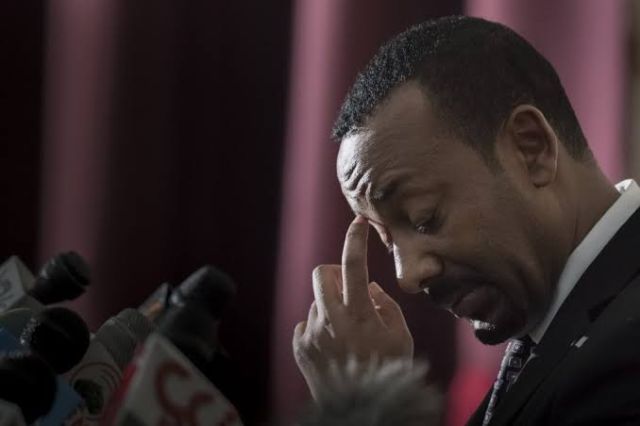
Addis Ababa / Khartoum — Ethiopian Prime Minister Abiy Ahmed, in a statement dated November 23, invited all military, political and civilian parties in Sudan to an inclusive dialogue in Addis Ababa. Abiy proposed the formation of a national unity government, declared that his country would remain "equidistant from all parties" and insisted that the initiative was driven by "no particular agenda." Ethiopia's record in this war shows the exact opposite.
Not Neutral, but a Party to the Conflict
Ethiopia allowed the Rapid Support Forces (RSF) to establish a training camp on its territory. At a secret facility in Benishangul-Gumuz, exposed by Reuters in February through satellite imagery and internal Ethiopian security documents, 4,300 RSF fighters were undergoing training in early January. According to eight sources, including a senior Ethiopian official, the United Arab Emirates financed the camp's construction, while Abu Dhabi provided trainers and logistical support.
The consequences of the camp became visible on the battlefield. The RSF advanced this year into Blue Nile State along the Ethiopian border, displacing approximately 100,000 people according to UN figures. A report submitted by Khartoum to the UN Security Council documented the launch of 187 kamikaze drones from Ethiopian territory, resulting in approximately 500 civilians killed or wounded. Sudan formally lodged a complaint against Ethiopia with the Security Council on October 30.
Diplomats Expelled Just Three Weeks Earlier
Abiy's peace appeal came at a time when relations between the two countries had reached a new low. Just three weeks before the invitation, Ethiopia expelled six staff members from Sudan's consulate in Asosa, while Khartoum expelled Ethiopian diplomats in response. Addis Ababa is accusing the Sudanese army of supporting Tigray-linked armed groups while simultaneously inviting that same army to negotiations in its own capital.
Abiy's close relationship with the RSF is nothing new. RSF leader Mohamed Hamdan Dagalo (Hemedti) was received in Addis Ababa in December 2023 with head-of-state protocol.
Meeting with the UAE Just Before the Invitation
Around the time he announced the initiative, Abiy met UAE Minister of State for Foreign Affairs Sheikh Shakhboot bin Nahyan in Addis Ababa. The UAE, which the Sudanese army considers the RSF's principal backer, is one of Ethiopia's largest financial and political supporters. In the army's eyes, any negotiating table established in Addis Ababa would be Abu Dhabi's table.
The initiative also targets Khartoum's own political process. Sovereignty Council Chairman Abdel Fattah al-Burhan launched plans in August for a "Sudanese-Sudanese dialogue" to be held inside the country. Abiy's invitation creates a competing venue for that process and offers the RSF an opportunity to gain at the negotiating table the political legitimacy it has failed to secure on the battlefield.
Contradicting His Own Words
In his statement, Abiy declared that "Imposed solutions do not bring lasting peace." Yet a negotiating table established by a capital that has opened its territory to one side of the war is itself an act of imposition. The statement provides neither a date for negotiations nor a list of invited participants. Neither the Sudanese army nor the RSF has responded to the invitation.
Ethiopia mediated between the military council and the Forces of Freedom and Change in 2019. Back then, Addis Ababa was not a party to Sudan's conflict. Today, it is.