Ethiopian-Born Melat Kiros Wins Historic US House Seat
Ethiopian-born Melat Kiros has been elected to the United States House of Representatives after winning Colorado's 1st Congressional District in the November 3, 2026 midterm elections. The 29-year-old Democrat secured approximately 78% of the vote, becoming the first Generation Z woman elected to Congress. Born in Addis Ababa and raised in Denver, Kiros also becomes the first Black woman elected to Congress from Colorado, marking a significant milestone in the political representation of younger Americans and communities with African immigrant roots.
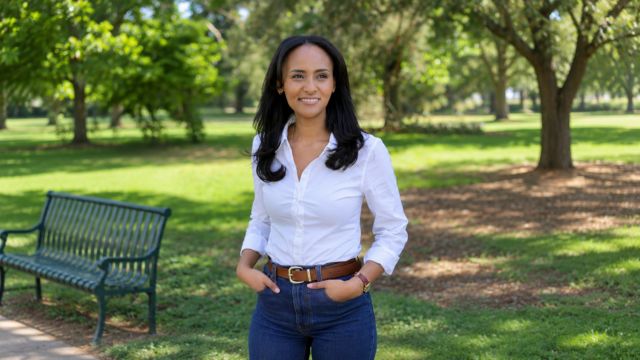
An Ethiopian-born politician has made history in the United States after winning a seat in the House of Representatives in the 2026 midterm elections.
Melat Kiros, 29, secured victory in Colorado's 1st Congressional District, defeating Republican candidate Christy Peterson and independent challenger Shimon Blau.
According to initial Associated Press election figures, Kiros received approximately 78% of the vote, while Peterson secured around 14% and Blau approximately 6%.
Although the final vote count has not yet been certified, Kiros' election victory has been confirmed.
Her election makes her the first woman from Generation Z to win a seat in the US Congress and the first Black woman elected to represent Colorado in the federal legislature.
From Addis Ababa to the US Congress
Kiros was born in Addis Ababa, Ethiopia, in 1997.
Her family moved to the United States when she was still a baby, settling in Denver, Colorado, where she grew up.
Her father had been selected through the US Diversity Visa Lottery, providing the family with an opportunity to establish a new life in America.
Kiros has spoken about the difficulties her parents faced as immigrants, including the need to work multiple jobs while adapting to their new country.
She has also highlighted the support her family received from Denver's Ethiopian immigrant community.
Her upbringing shaped her interest in economic opportunity, public services and the challenges faced by working families.
Kiros later attended Washington College in Maryland, graduating in 2018 after studying political science and economics.
She earned a law degree from the University of Notre Dame in 2022.
After working as an attorney, she returned to Colorado and began pursuing doctoral studies in public policy.
First Gen Z Woman Elected to Congress
Kiros' victory represents a milestone in the generational composition of the US legislature.
At 29, she became the first woman from Generation Z, generally defined as people born between 1997 and 2012, to be elected to Congress.
She is not the first member of the generation to serve in the federal legislature.
Democrat Maxwell Frost of Florida became the first Gen Z member of Congress following his election in 2022.
Kiros will join the House at the beginning of the new congressional term in January 2027.
In an interview with CBS News, she said she viewed her younger age as an advantage rather than a disadvantage.
She explained that younger representatives could bring different perspectives on economic pressures, climate change and the long-term consequences of government policy.
Defeating a Long-Serving Democratic Incumbent
Before winning the general election, Kiros had already attracted national political attention through an unexpected primary victory.
On June 30, 2026, she defeated Democratic Representative Diana DeGette, who had represented Colorado's 1st Congressional District since 1997.
DeGette was serving her 15th term in Congress when Kiros challenged her for the party's nomination.
Kiros secured approximately 53.2% of the primary vote, compared with 39.8% for DeGette.
A third candidate, Wanda James, received around 7%.
The outcome reflected tensions within the Democratic Party between established officeholders and candidates advocating more extensive policy changes.
Kiros subsequently entered the November general election as the Democratic nominee for the Denver-area district.
Her victory means the district will have a new member of Congress for the first time in nearly three decades.
Campaign Focused on Affordability and Public Services
Kiros identifies as a democratic socialist and built her campaign around economic and social policy proposals.
Her programme included Medicare for All, a publicly financed universal healthcare system.
She also called for greater investment in affordable housing, universal childcare and public services.
Another central element of her campaign was reducing the influence of corporate donations in American politics.
She argued that elected representatives should be more accountable to working families rather than major donors.
On immigration, Kiros advocated abolishing Immigration and Customs Enforcement, commonly known as ICE, and replacing it with a different immigration system.
Her positions attracted backing from progressive political organisations, including the Democratic Socialists of America.
Supporters emphasised her background as a former lawyer, student and service-sector worker.
Critics questioned her limited experience in elected office and raised concerns about some of her foreign policy positions.
Position on Gaza and US Military Aid to Israel
Kiros' criticism of US military assistance to Israel became another prominent feature of the campaign.
She called for an end to American military support for Israel and argued that federal resources should instead support healthcare, housing and education.
Her statements on the war in Gaza generated controversy during both the Democratic primary and general election campaigns.
Some Jewish community representatives criticised her position on Israel, while Kiros maintained that criticism of the Israeli government and its policies should be distinguished from antisemitism.
Her foreign policy views placed her within a broader debate among Democrats over American military assistance abroad.
The issue also helped define her political identity as a candidate challenging established party positions.
Losing Her Legal Job in 2023
An earlier dispute over campus protests and freedom of expression played a role in Kiros' political development.
In 2023, she lost her position at a major New York law firm after refusing to remove an open letter she had written to law firms concerning pro-Palestinian student demonstrations.
The letter criticised efforts to conflate political criticism of Israel with antisemitism, while also condemning antisemitic prejudice.
Following her dismissal, Kiros returned to Colorado and continued her academic studies.
She also worked as a barista while pursuing her political ambitions.
Before her 2026 campaign, she had never held elected office.
Her primary victory over DeGette therefore represented a rapid transition from political newcomer to congressional nominee.
African Diaspora Representation in US Politics
Kiros' election drew attention beyond Colorado because of her Ethiopian background and the historic nature of her victory.
BBC Africa highlighted her alongside other politicians with African roots who won races in the 2026 US midterm elections.
Candidates with family connections to Somalia, Egypt, Ghana and Nigeria also secured victories in federal, state and local contests.
For African diaspora communities, these developments illustrate the increasing visibility of people from immigrant backgrounds in American public institutions.
Kiros' journey from Addis Ababa to Denver and ultimately to Congress is one of the notable individual stories to emerge from the elections.
Her new role will involve representing the interests of Colorado's 1st Congressional District, rather than those of Ethiopia.
She is expected to take office on January 3, 2027, when the new congressional term begins.
Her stated priorities include healthcare, housing affordability, immigration reform, economic inequality and US foreign policy.