Ethiopian Navy Chief Raises Stakes Over Red Sea Access
Ethiopian Navy Commander Vice Admiral Kindu Gezu has renewed his country's determination to regain direct access to the Red Sea, describing the loss of its coastline as a historic tragedy. Addressing former military and police personnel, Gezu said Ethiopia would pursue maritime access through legal channels, diplomacy or other alternatives. His remarks come amid a serious deterioration in relations with Eritrea, which has accused Addis Ababa of threatening its sovereignty and territorial integrity over the strategic port of Assab.
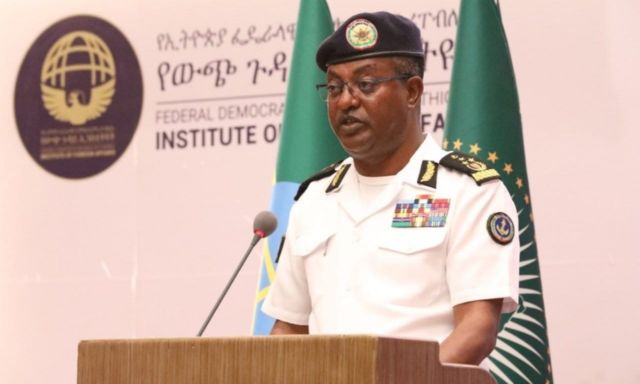
Ethiopia's ambition to secure direct access to the Red Sea has returned to the center of regional debate following new remarks by Navy Commander Vice Admiral Kindu Gezu.
Speaking at a gathering of former military and police personnel on November 7, Gezu described Ethiopia's loss of maritime access as one of the major tragedies in the country's history.
He argued that Ethiopia's historical relationship with the Red Sea extended back thousands of years and should not be understood solely through the political developments of the twentieth century.
The navy commander said Ethiopia was determined to restore access to the sea through international law, diplomatic negotiations or other available alternatives.
The statement has attracted attention amid growing military and diplomatic tensions between Ethiopia and Eritrea, particularly concerning the sovereignty of Eritrea's southern coastline and Assab port.
Gezu Says Ethiopia Will Pursue Lost Maritime Access
Vice Admiral Kindu Gezu emphasized that Ethiopia's connection to the Red Sea represents an important part of the country's history and national identity.
He argued that Ethiopia had lost access to its former maritime outlets through what he described as unlawful political developments.
Gezu maintained that the Ethiopian government and people remained determined to reverse the consequences of that loss.
He identified legal procedures and diplomatic engagement as possible means of achieving the country's maritime objectives, while also referring to unspecified alternatives.
The reference to other options comes at a sensitive time, when Eritrean authorities have repeatedly expressed concern about statements by Ethiopian military commanders concerning Red Sea ports.
However, Gezu's remarks did not constitute a publicly announced order to launch a military operation, nor did they establish that Ethiopia had made a new formal decision to seize Eritrean territory.
Former Military Personnel Asked to Support Maritime Agenda
The Ethiopian navy commander also addressed the role of retired military and police personnel in supporting the country's maritime ambitions.
Gezu urged former security personnel to contribute to public awareness of Ethiopia's historical links with the Red Sea.
He emphasized the importance of encouraging younger generations to understand the country's maritime objectives.
The remarks reflected the Ethiopian government's increasing emphasis on sea access as an issue involving economic development, national security and long-term strategic planning.
Senior Ethiopian officials have repeatedly argued that the country should not remain permanently dependent on foreign maritime facilities.
The military's involvement in this debate demonstrates how the issue has expanded beyond transport policy and diplomatic negotiations.
Eritrea's Independence Changed Ethiopia's Geography
Ethiopia became landlocked following Eritrea's independence in April 1993.
The independence process followed a referendum conducted on April 23–25 under international observation.
An overwhelming majority of participating Eritrean voters supported independence.
Eritrea declared independence on April 27, 1993, and Ethiopia subsequently recognized its sovereignty.
The ports of Assab and Massawa consequently remained within the internationally recognized territory of Eritrea.
For several years after independence, Ethiopia continued using Eritrean port infrastructure for commercial activities.
However, the 1998–2000 border war severely damaged relations between the two countries.
Ethiopia subsequently shifted most of its international maritime trade through Djibouti.
Addis Ababa now argues that the loss of a direct coastline created long-term economic and strategic vulnerabilities.
Eritrea, however, maintains that its independence resulted from a legitimate process of self-determination and that its territorial sovereignty is not open to unilateral revision.
Assab Port Remains the Main Point of Contention
The Eritrean port of Assab has emerged as one of the most sensitive issues in Ethiopia's pursuit of maritime access.
Located in southern Eritrea, Assab has historical transport connections with Ethiopia and occupies a geographically important position near the country's northeastern border.
Ethiopian officials have identified Assab, Massawa and other maritime facilities as possible options for restoring access to the Red Sea.
The port's location has also made it a recurring subject of debate in Ethiopian military and political discussions.
For Eritrea, Assab is part of its sovereign national territory.
Asmara has consistently distinguished between arrangements allowing Ethiopia to use port services for international commerce and demands involving sovereign control of Eritrean coastal territory.
The distinction has become increasingly important as Ethiopian officials discuss maritime access in both economic and national security terms.
No new bilateral agreement granting Ethiopia special rights over Assab has been announced.
Eritrea Accuses Ethiopia of Threatening Its Sovereignty
Eritrea has responded strongly to statements made by Ethiopian political and military officials concerning the Red Sea.
On November 2, Eritrea's Ministry of Information published a compilation of remarks attributed to Ethiopian government and military leaders.
The Eritrean authorities presented the statements as evidence of what they described as an increasingly explicit agenda to acquire sovereign access to the Red Sea.
Eritrea also circulated a diplomatic note to United Nations Security Council members in October, accusing Ethiopia of pursuing a policy that threatened its independence and territorial integrity.
Foreign Minister Osman Saleh raised similar concerns during a briefing to diplomats in Asmara.
The Eritrean government has argued that threats involving the possible use of force violate the United Nations Charter and the principles governing relations between sovereign states.
These statements preceded Gezu's latest remarks and form part of an ongoing confrontation between the two governments.
A separate official Eritrean response specifically addressing his November 7 speech has not been independently confirmed.
Diplomatic Relations Severed in October
The dispute over maritime access has unfolded alongside a broader breakdown in Ethiopia–Eritrea relations.
On October 1, 2026, Ethiopia ordered ten Eritrean diplomats to leave the country and moved to close its embassy in Asmara.
Eritrea responded by announcing the severance of diplomatic relations.
The two governments subsequently exchanged accusations concerning military aggression and support for armed groups.
Ethiopia alleged that Eritrean forces had entered its northern territory and advanced as far as approximately 60 kilometres into the Tigray region.
Eritrea rejected Ethiopia's accusations and argued that Addis Ababa was attempting to justify military action against Eritrean territory.
Both governments presented their positions through diplomatic communications to the United Nations.
The deterioration in relations has raised concerns about the possibility of renewed interstate conflict despite the peace agreement signed by the two countries in 2018.
Renewed Fighting in Tigray Increases Regional Risks
The latest maritime dispute is closely linked to renewed instability in northern Ethiopia.
Fighting intensified in September and October 2026 between Ethiopian federal forces and armed groups associated with the Tigray People's Liberation Front.
Ethiopia has accused Eritrea of supporting armed opposition groups operating in northern Ethiopia.
Eritrea denies those accusations and maintains that Ethiopian military activities threaten regional stability.
The escalation has placed additional strain on the Pretoria peace process, which was intended to end the devastating 2020–2022 Tigray conflict.
As military deployments and diplomatic tensions continue, the proximity of Ethiopian and Eritrean forces presents an additional concern.
The combination of renewed fighting in Tigray and disagreement over Assab has increased international fears that local clashes could develop into a wider regional confrontation.
Ethiopia Continues Rebuilding Its Navy
The country's Red Sea ambitions are also connected to efforts to re-establish an Ethiopian naval force.
Ethiopia maintained a navy before Eritrea's independence but disbanded the service in 1996 after losing direct coastal access.
Following Prime Minister Abiy Ahmed's rise to power in 2018, the government began rebuilding its naval capabilities.
The re-established navy has focused on training, institutional development and cooperation with regional maritime partners.
Despite these efforts, Ethiopia does not possess a sovereign naval base or coastline on the Red Sea.
On October 30, Vice Admiral Kindu Gezu told a regional maritime security forum in Addis Ababa that Ethiopia's return to maritime access was inevitable.
The forum, held from October 26 to 29, brought together regional representatives to discuss search and rescue operations, maritime security and cooperation.
At that gathering, Gezu emphasized the importance of dialogue with neighboring countries and collective responses to maritime threats.
His subsequent remarks concerning alternative means of regaining access have therefore attracted particular attention against the background of an already tense regional security environment.
Dependence on Djibouti Shapes Ethiopia's Strategy
Economic considerations remain central to Ethiopia's demand for improved maritime connectivity.
Ethiopia relies on Djibouti for the majority of its international seaborne trade.
Ethiopian government sources estimate that more than 85 percent of the country's maritime trade is conducted through Djibouti-related routes.
The Port of Djibouti and the railway connecting Djibouti with Ethiopia form essential components of the country's trade infrastructure.
Addis Ababa argues that dependence on a limited number of transport corridors creates logistical vulnerabilities and increases commercial costs.
The government has therefore sought to diversify its access to international shipping routes.
Potential alternatives include additional port-service agreements, transport corridors and long-term commercial arrangements with neighboring coastal states.
However, securing reliable access to port services is legally distinct from acquiring sovereignty over another country's territory.
International Law Distinguishes Transit Access From Sovereignty
The legal dimension of Ethiopia's maritime ambitions is central to the dispute.
Article 125 of the United Nations Convention on the Law of the Sea recognizes the right of landlocked states to access the sea and provides for freedom of transit.
The Convention also states that the terms and conditions of transit must be established through agreements involving the relevant landlocked and transit states.
It expressly recognizes the sovereignty of countries through whose territories transit routes pass.
Consequently, the international legal framework for maritime access does not automatically grant a landlocked state ownership of, or sovereignty over, another country's port.
Commercial leasing arrangements, port-service agreements and mutually accepted transit corridors can provide lawful mechanisms for addressing maritime transport requirements.
Eritrea's position is that Ethiopia's economic needs do not justify territorial claims or threats involving the use of force.
The dispute therefore involves both the practical challenge of maritime connectivity and the legal principles protecting internationally recognized borders.
Somalia's Maritime Dispute Offers a Diplomatic Example
Ethiopia's search for maritime access has also affected its relations with Somalia.
In January 2024, Ethiopia pursued a coastal access arrangement with authorities in northern Somalia outside the Somali Federal Government's approval.
Mogadishu rejected the move as a violation of Somalia's sovereignty and territorial integrity.
In December 2024, Ethiopia and Somalia reached the Ankara Declaration, reaffirming mutual respect for sovereignty, unity and territorial integrity.
The declaration established a framework for negotiating commercially viable maritime access for Ethiopia under Somalia's sovereign authority.
The agreement demonstrated that port access can be discussed through bilateral arrangements without requiring the transfer of sovereign territory.
However, no comparable settlement has been announced between Ethiopia and Eritrea concerning Assab or other Eritrean ports.
Red Sea Ambitions Remain a Source of Regional Tension
Vice Admiral Kindu Gezu's latest remarks reaffirm Ethiopia's determination to obtain more direct and reliable access to the Red Sea.
For Addis Ababa, the issue is connected to national development, economic connectivity and long-term security planning.
For Asmara, Ethiopian statements concerning historical maritime claims and possible alternative methods raise serious questions about respect for Eritrea's sovereignty.
The breakdown in diplomatic relations in October and renewed hostilities in northern Ethiopia have made the disagreement more difficult to manage.
Although Gezu referred to legal and diplomatic approaches, his mention of other alternatives has added to the debate over the direction of Ethiopia's maritime policy.
No new military operation against Assab or agreement granting Ethiopia sovereign maritime access has been confirmed in connection with his speech.
The future of the dispute will depend on whether the two countries can establish a diplomatic framework that addresses Ethiopia's commercial interests while respecting Eritrea's internationally recognized territory and sovereignty.