Haftar Meets Turkish Ministers and Intelligence Chief
Eastern Libyan military commander Khalifa Haftar has held high-level talks in Ankara with Turkish Foreign Minister Hakan Fidan, Defence Minister Yaşar Güler, Energy Minister Alparslan Bayraktar, intelligence chief İbrahim Kalın and Chief of General Staff Selçuk Bayraktaroğlu. The Libyan delegation included Saddam Haftar, Khaled Haftar and Belqasim Haftar, representing the eastern military command and its reconstruction authority. The meeting comes amid expanding diplomatic engagement between Türkiye and eastern Libya, efforts to reunify the country's armed forces and renewed cooperation over Eastern Mediterranean maritime arrangements.
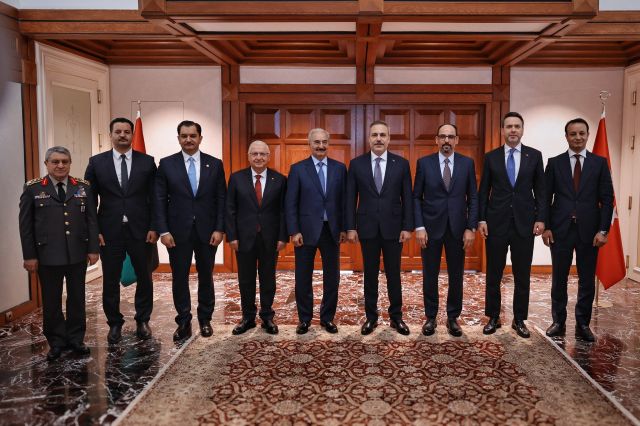
Khalifa Haftar meets senior Turkish officials in Ankara
Field Marshal Khalifa Haftar, commander of the eastern-based Libyan National Army, held high-level discussions with senior Turkish officials in Ankara on Wednesday, November 25, 2026.
According to Turkish diplomatic sources, the meeting brought together Foreign Minister Hakan Fidan, Minister of National Defence Yaşar Güler, Minister of Energy and Natural Resources Alparslan Bayraktar, Chief of General Staff General Selçuk Bayraktaroğlu and National Intelligence Organization Director İbrahim Kalın.
The Libyan delegation was led by Haftar and included Deputy Commander General Saddam Haftar, Chief of Staff Khaled Haftar and Belqasim Haftar, chairman of Libya's Development and Reconstruction Fund.
Photographs of the meeting were released by Türkiye's Foreign Ministry.
The gathering represented a major high-level contact between Ankara and the military leadership controlling much of eastern Libya.
The Turkish government confirmed the participants but did not immediately announce a detailed meeting agenda or specific agreements resulting from the discussions.
Haftar received with military ceremony
Haftar arrived in Ankara on Tuesday, November 24, beginning his first official visit to Türkiye.
The Libyan commander was received by Turkish Chief of General Staff General Selçuk Bayraktaroğlu.
The reception included military honours, national anthems and an inspection of the honour guard.
Photographs and video released by the eastern Libyan military command documented the formal reception and Haftar's initial meetings with Turkish military representatives.
On the following day, the visit expanded to include senior Turkish officials responsible for foreign affairs, defence, energy, military command and intelligence.
The meetings came amid increasingly frequent contacts between Turkish authorities and the eastern Libyan leadership.
Senior military and reconstruction officials join delegation
Haftar's accompanying delegation included three prominent figures from his family who occupy influential positions within eastern Libya's military and economic institutions.
Saddam Haftar serves as deputy commander of the Libyan National Army and has been involved in high-level military and diplomatic contacts.
Khaled Haftar is chief of staff of the eastern-based military command and oversees major elements of its military structure.
Belqasim Haftar heads Libya's Development and Reconstruction Fund, an institution responsible for coordinating reconstruction and infrastructure projects in eastern Libya.
Their participation brought together representatives of the military leadership and the authority involved in major reconstruction programmes.
The presence of these officials reflects the broad institutional relationship developing between Ankara and the eastern administration.
However, no new infrastructure contract or reconstruction investment package was announced following the November 25 meeting.
Military unification remains an important diplomatic issue
Haftar's visit took place as Türkiye continued efforts to facilitate talks between Libya's rival military and political institutions.
In October 2026, Ankara hosted representatives from eastern and western Libya for discussions on the possible reunification of the country's armed forces.
The negotiations examined the creation of a common military leadership structure and arrangements for cooperation between the competing commands.
No final agreement emerged from those consultations.
Libya remains divided between the internationally recognized Government of National Unity in Tripoli and rival political and military institutions in the east.
Türkiye has maintained relations with both sides and has emphasized the need for a unified Libyan state.
Haftar's latest meeting with Turkish officials comes within that broader diplomatic context, although no specific agreement on military unification was announced.
Relations between Ankara and Benghazi expand
The latest meeting followed several months of diplomatic and military exchanges.
Turkish Foreign Minister Hakan Fidan received Saddam Haftar in Ankara on July 24.
Fidan subsequently visited Benghazi in August, meeting Khalifa Haftar and other senior eastern Libyan officials as part of a wider diplomatic mission covering both sides of the country.
Military contacts intensified in November.
On November 12, Khaled Haftar visited Ankara and met Turkish Chief of General Staff Selçuk Bayraktaroğlu.
The November 25 meeting brought Khalifa Haftar himself into direct contact with Türkiye's senior foreign policy, defence, energy and intelligence officials.
The sequence of visits reflects the development of relations between Ankara and an eastern Libyan leadership that had previously been in direct military confrontation with Turkish-backed forces.
Maritime agreement marks major turning point
A significant development in the rapprochement occurred on October 20, when Libya's eastern-based House of Representatives approved the 2019 maritime jurisdiction agreement with Türkiye.
The memorandum, signed on November 27, 2019, between Türkiye and Libya's then Government of National Accord, established a framework for delimiting maritime jurisdiction areas in the Mediterranean.
The eastern parliament had previously opposed the agreement.
Its October decision reversed earlier resolutions rejecting the memorandum and severing political relations with Ankara.
Turkish President Recep Tayyip Erdoğan welcomed the parliamentary decision.
Foreign Minister Fidan also held consultations with Libyan officials following the vote.
The maritime agreement remains disputed by Greece, Egypt and the European Union, which have raised objections concerning maritime boundaries and the rights of third countries.
The parliamentary approval nevertheless removed a major obstacle in relations between Ankara and eastern Libya.
Energy and reconstruction institutions represented
The participation of Turkish Energy Minister Alparslan Bayraktar and Libyan reconstruction fund chairman Belqasim Haftar brought economic institutions into the high-level meeting.
Türkiye and Libya have longstanding economic links involving construction, energy, infrastructure and other commercial activities.
Turkish companies have participated in projects across different parts of Libya, while the country's reconstruction needs remain substantial after years of conflict.
Ankara has also pursued cooperation with Libyan institutions concerning hydrocarbons and maritime energy activities.
Eastern Libya's reconstruction programmes represent another area of potential commercial engagement.
The November 25 meeting included officials responsible for these sectors, but no new energy exploration agreement, construction contract or financing arrangement was publicly confirmed.
Türkiye also maintains relations with Tripoli
Ankara's engagement with Haftar has developed alongside continued diplomatic cooperation with the Tripoli-based Government of National Unity.
On November 21, Foreign Minister Hakan Fidan and intelligence chief İbrahim Kalın met Libyan Prime Minister Abdul Hamid Dbeibah in Istanbul.
President Erdoğan had also met Dbeibah during the COP31 climate conference in Antalya earlier in November.
Türkiye has emphasized that its relations with both eastern and western Libya are intended to support stability, national unity and cooperation.
The simultaneous diplomatic contacts reflect Ankara's efforts to maintain communication with the country's competing political and security authorities.
This approach has gained importance as negotiations continue over unified national institutions and the future of Libya's political transition.
Former battlefield adversaries deepen diplomatic contacts
The November 25 meeting represents a substantial change in relations between Türkiye and Haftar.
During the 2019–2020 conflict, Ankara provided military assistance to the internationally recognized government in Tripoli as Haftar's forces attempted to capture the capital.
Turkish military support played an important role in preventing the eastern commander's offensive from succeeding.
The relationship subsequently shifted toward renewed political dialogue and military contacts.
Haftar's arrival in Ankara, followed by meetings with Türkiye's senior ministers and security leadership, demonstrates how far those diplomatic contacts have developed.
For now, the confirmed outcome of the visit is the high-level meeting itself.
Further official announcements will be needed to establish whether the consultations result in new defence arrangements, economic agreements or progress toward the reunification of Libya's military institutions.