Kenyan Cult Leader Jailed for 200 Years Over 191 Murders
A Kenyan court has sentenced cult leader Paul Nthenge Mackenzie to 200 years in prison for the murders of 190 children and one adult in the Shakahola massacre. The High Court in Mombasa found that 183 victims died after being deliberately starved, while eight children were directly killed. Twenty-eight accomplices received prison sentences ranging from 10 to 160 years in one of Kenya's largest cult-related murder cases.
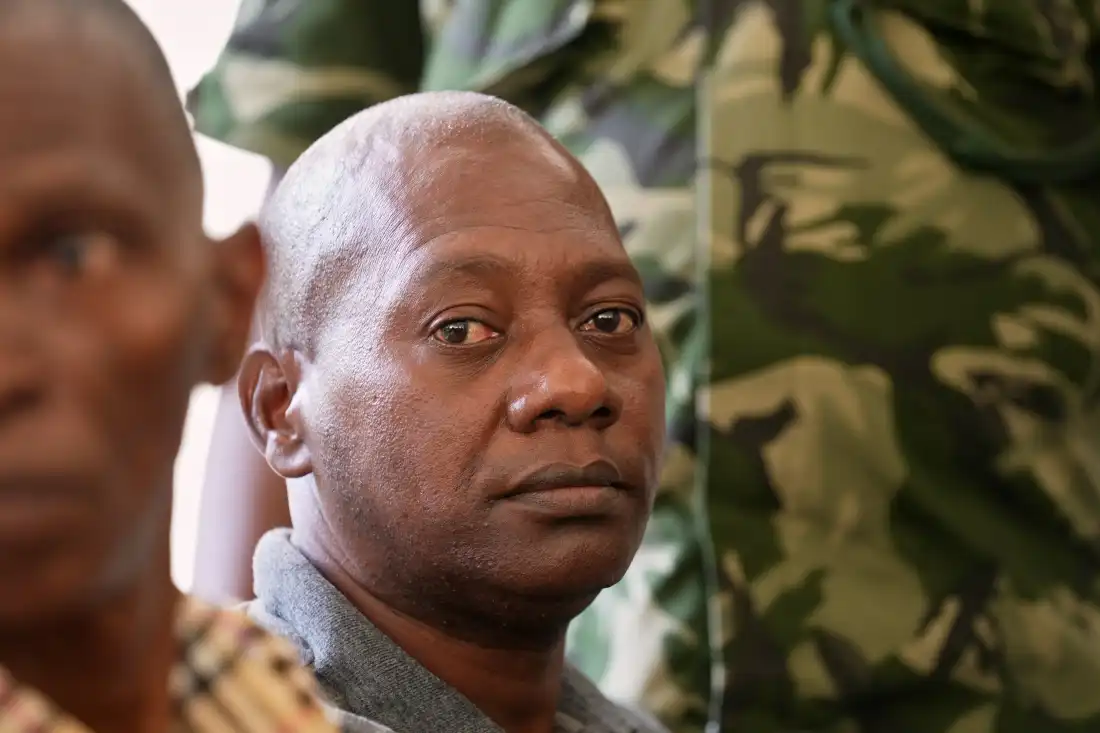
A Kenyan court has handed down a 200-year prison sentence to Paul Nthenge Mackenzie, the leader of a religious movement responsible for the deaths of hundreds of followers in the Shakahola Forest.
The sentence was delivered at the High Court in Mombasa on Friday, November 6, following Mackenzie's conviction for 191 murders involving 190 children and one adult.
Justice Diana Kavedza Mochache found that Mackenzie, who led the Good News International Church, had organized a system of enforced fasting that caused the deaths of his followers.
The court determined that he bore primary responsibility for directing the victims to a remote area in Kilifi County and imposing practices that ultimately resulted in mass fatalities.
Court Imposes Two Consecutive 100-Year Sentences
The court separated the 191 murders into two categories based on the circumstances of the victims' deaths.
Mackenzie received 100 years in prison for 183 murders committed through deliberate starvation, involving 182 children and one adult.
He received another 100 years for the direct murders of eight children.
The court ordered the sentences within each category to run concurrently, while the two separate 100-year terms would run consecutively.
This brought Mackenzie's aggregate prison sentence to 200 years.
Evidence in the direct homicide cases included deaths involving suffocation, strangulation and blunt-force injuries.
The court considered the separation of the two categories necessary to reflect the distinct nature and seriousness of the crimes.
Children Were Targeted First in Enforced Fasting
The case centered on a religious movement led by Mackenzie, who persuaded followers that they needed to abstain from food to reach heaven.
According to the prosecution, Mackenzie instructed members of the group to begin the fasting process with children before extending it to young people, women and men.
Followers were moved into an isolated area around Shakahola Forest, where their contact with the outside world became increasingly restricted.
Investigators found that people who resisted the fasting orders faced threats, beatings, physical restraint and confinement.
The court rejected arguments that children had voluntarily participated in the fatal fasting practices.
Justice Kavedza concluded that Mackenzie's leadership and instructions were central to the organized system that led to the deaths.
Twenty-Eight Accomplices Also Sentenced
The court also imposed prison sentences on 28 individuals convicted alongside Mackenzie.
Their penalties ranged from 10 to 160 years, reflecting the roles they played in carrying out or supporting the activities that resulted in the deaths.
Among those sentenced was Smart Mwakalama, an assistant pastor associated with Mackenzie's religious movement.
Mwakalama received a 160-year prison sentence.
Other convicted individuals included people responsible for enforcing fasting instructions, restricting victims' movements and helping conceal bodies in shallow graves.
The case originally involved 31 defendants, but proceedings against two ended after they died during the trial.
The court convicted the remaining 29 defendants on October 19, 2026, before delivering their sentences on November 6.
Shakahola Forest Death Toll Exceeded 400
The Shakahola tragedy first became public in April 2023 after Kenyan authorities discovered human remains buried in the remote forest near Malindi.
Police and forensic teams subsequently uncovered extensive burial sites containing the bodies of adults and children.
Investigations eventually led to the recovery of 448 bodies from the Shakahola area.
The identification of victims became a prolonged forensic process, with authorities relying on DNA analysis and other evidence to establish identities and reunite remains with families.
Some relatives waited years before receiving the bodies of their loved ones.
Mackenzie is also facing a separate legal case concerning 52 additional deaths at another location.
These investigations have brought the wider suspected death toll to approximately 500.
The November 6 sentencing, however, relates specifically to the 191 murders addressed in this case.
Prosecutors Had Sought the Death Penalty
Kenyan prosecutors urged the High Court to impose the death penalty on Mackenzie because of the scale, organization and brutality of the killings.
They argued that the deliberate targeting of children and the prolonged nature of the crimes justified the most severe punishment available under the law.
The court ultimately imposed the 200-year sentence.
Although capital punishment remains part of Kenya's legal framework, the country has not carried out an execution since 1987.
Mackenzie denied responsibility for forcing followers to starve, but the court rejected his defence.
His legal representatives have indicated that the sentence will be challenged on appeal.
Families Continue to Demand Accountability
The verdict has brought renewed attention to the relatives of those killed in Shakahola.
For many families, the sentencing marks an important stage in a legal process that began more than three years ago.
One grieving father who lost his wife and six children said the punishment could not compensate for the loss of his family and called for the death penalty.
The case has also raised questions about the response of authorities before the mass graves were discovered.
Investigations revealed that Mackenzie had previously been arrested and released, prompting scrutiny of whether earlier warnings could have prevented the deaths.
Families and rights advocates have continued to call for accountability beyond the individuals directly convicted of the murders.
Religious Oversight Remains a National Issue
The Shakahola massacre prompted a wider debate in Kenya about regulating religious institutions and protecting vulnerable followers from abuse.
Government inquiries examined the oversight of religious organizations, child protection mechanisms and the responsibilities of law enforcement agencies.
Proposals for stronger regulation have been discussed, although not all recommended reforms have been enacted into law.
Mackenzie also faces separate proceedings involving allegations of terrorism, torture, child abuse and other offences.
The 200-year sentence delivered in Mombasa represents a major judicial development in the investigation into the Shakahola deaths, while other legal proceedings connected to the tragedy remain unresolved.