Libya and US Sign Critical Minerals Cooperation Deal
Libya and the United States have signed a cooperation framework covering critical minerals, geological exploration, resource assessment and investment opportunities for American companies. The agreement forms part of a broader strategic economic partnership launched in Washington, with both governments seeking to strengthen mineral supply chains, expand technical cooperation and support the development of Libya's mining sector beyond its traditional reliance on oil and gas.
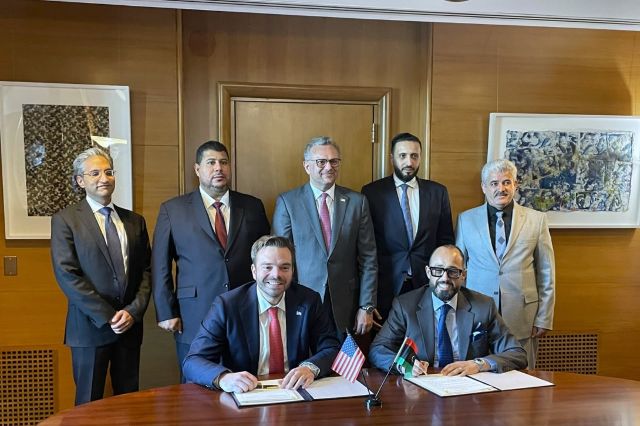
Libya and the United States have signed a new framework for cooperation on critical minerals, marking an expansion of bilateral economic engagement into geological exploration, mineral resource assessment and the development of future mining investment opportunities.
The U.S. Department of State's Bureau of Economic and Business Affairs announced the framework on November 19, 2026, describing the agreement as a step toward securing and diversifying critical mineral supply chains while creating opportunities for American companies in Libya's emerging mining sector.
The Libyan Government of National Unity subsequently provided details of the cooperation framework during a signing program in Washington on November 21.
The agreement forms part of the Executive Program for the Strategic Partnership between Libya and the United States, which also covers energy, aviation, infrastructure and technology transfer.
Mustafa Al-Manea signs framework on behalf of Libya
According to the Libyan News Agency, the critical minerals cooperation framework was signed by Mustafa Al-Manea, head of the Executive Team for the Prime Minister's Initiatives and Strategic Projects.
The signing ceremony was attended by Massad Boulos, senior adviser to the U.S. President for Arab and African affairs, and Faraj Al-Shandouli, director general of Libya's National Mining Corporation.
Representatives of the U.S. Department of State also participated.
The American delegation included Deputy Assistant Secretary of State Daniel Kennedy, Special Representative Vinay Chawla and Senior Adviser Reggie Singh, alongside other officials.
The agreement aims to strengthen cooperation in geological exploration, mineral resource assessment, investment development, and the exchange of expertise and technology.
Libyan authorities presented the framework as part of efforts to diversify the country's economy and expand partnerships with American companies and institutions.
Geological exploration becomes a central priority
A major objective of the agreement is to improve the scientific assessment of Libya's mineral resources.
The cooperation framework provides a basis for technical engagement on geological surveys, resource evaluation and identifying areas with potential for future investment.
Libya possesses extensive territory containing geological formations that have not been comprehensively assessed for modern commercial mining operations.
Although the country has long been a major oil and gas producer, other mineral industries remain relatively small in comparison.
The latest agreement is intended to support the development of reliable geological information and create opportunities for future exploration projects.
These activities could provide the technical foundation for determining which mineral resources may eventually support commercially viable production.
Previous talks with the U.S. Geological Survey
The new framework follows earlier discussions between Libya's National Mining Corporation and the United States Geological Survey.
On May 4, 2026, a Libyan government delegation met USGS officials in Washington to explore technical cooperation in geological surveying and mineral resource evaluation.
The discussions focused on launching advanced geological studies, assessing strategic and rare mineral resources, and improving the investment environment for mining activities.
The Libyan delegation included Economy and Trade Minister Suhail Abu Shiha, Oil and Gas Minister Khalifa Abdulsadiq, Transport Minister Mohammed Al-Shahoubi, Mustafa Al-Manea and National Mining Corporation Director General Faraj Al-Shandouli.
The May talks followed previous engagements held in October 2025 and February 2026.
Those discussions highlighted Libya's interest in building scientific and institutional capacity to support the development of its mineral sector.
Preliminary lithium indicators identified in eastern Libya
Libya's National Mining Corporation has also been examining potential mineral resources in the country's eastern regions.
In November 2026, the corporation's Al-Butnan branch invited local and international companies to collaborate on further studies and possible investments in the Jaghbub area, near the Egyptian border.
The corporation reported preliminary mineral indicators based on reconnaissance work and chemical analysis of samples collected from several locations.
Materials of interest included lithium, silica, rock salt, gypsum and clay minerals.
Lithium is particularly important for batteries used in electric vehicles and energy storage systems.
However, the corporation emphasized that the initial findings did not constitute evidence of commercially proven mineral reserves.
Further geological surveys, laboratory testing and economic feasibility studies are required before the scale and commercial potential of any deposits can be established.
The new U.S.-Libya framework has not identified Jaghbub or any other specific mining area as the subject of a confirmed American investment or extraction agreement.
Massad Boulos welcomes critical minerals cooperation
Massad Boulos welcomed the memorandum in comments published on November 20, describing it as an important step toward strengthening economic cooperation between Washington and Tripoli.
He highlighted responsible resource development and more resilient supply chains as key objectives of the new partnership.
The United States has been seeking to diversify its access to critical minerals used in advanced industries, including clean energy technologies, electronics and defense manufacturing.
Minerals such as lithium, cobalt and nickel, together with rare earth elements, have become increasingly important to global technology and industrial supply chains.
These materials are used in battery manufacturing, electric vehicles, electronic devices and specialized industrial equipment.
However, the U.S.-Libya agreement has not publicly identified the specific minerals that will be prioritized, the size of prospective investments or a timetable for commercial production.
Libya's mining sector remains underdeveloped
Data published by the United States Geological Survey illustrates the relatively limited scale of Libya's non-hydrocarbon mineral industry.
According to the USGS assessment for 2024, Libya was not a globally significant producer of mineral commodities.
Its mineral-related production included cement, gypsum, lime, salt, sulfur, iron and steel products, and small-scale artisanal gold production.
Mining represented only a minor component of the country's economy compared with its oil and gas industries.
The country has a legal framework for mineral exploration and extraction, and foreign companies may participate in joint ventures under applicable regulations.
The new cooperation framework therefore represents an effort to expand exploration and investment capacity in a sector that has not yet developed major commercial production of critical minerals.
Strategic partnership also covers aviation and energy
The critical minerals agreement was concluded during a wider series of economic meetings between Libyan and American officials in Washington.
The Executive Program for the Strategic Partnership was launched on November 20 with participation from senior government representatives and American companies.
The Libyan delegation included Economy and Trade Minister Suhail Abu Shiha, National Oil Corporation Chairman Masoud Suleiman and Libyan Investment Authority Chairman Ali Mahmoud.
The program covers increased oil and gas exploration and production, electricity and renewable energy projects, aviation, infrastructure development, mining and technology transfer.
As part of the same initiative, Libya also signed a separate cooperation agreement with American aerospace company Boeing.
That agreement addresses the development of Libya's civil aviation industry, planning for a new national airline, aircraft fleet development, professional training and the establishment of an aircraft maintenance and overhaul center.
The aviation arrangement is separate from the critical minerals memorandum, although both were announced under the wider strategic partnership program.
New investment talks held on November 22
The cooperation agenda continued on November 22, when the Libyan Government of National Unity delegation met officials at the U.S. Department of Commerce in Washington.
Discussions focused on strengthening economic and investment cooperation and facilitating the participation of American companies in strategic projects.
Representatives examined opportunities in oil and gas, energy, mining, aviation and infrastructure.
They also addressed regulatory and commercial obstacles affecting American businesses entering the Libyan market.
The role of the U.S. Trade Advocacy Center in supporting American companies was another focus of the meeting.
In separate discussions with Massad Boulos at the State Department, the Libyan delegation reviewed economic reforms, development programs and ways to translate recent agreements into practical investment projects.
The talks reflect a broader effort to move bilateral cooperation from diplomatic frameworks toward specific commercial and development initiatives.
Libya seeks alternatives to oil-dependent economy
Libya's economy remains heavily dependent on oil and gas revenues, exposing public finances to international energy price fluctuations and disruptions to domestic production.
The Government of National Unity has identified economic diversification and the expansion of non-oil industries as important development objectives.
Mining is among the sectors being considered for future growth through international partnerships and private investment.
The cooperation framework with Washington could support this strategy through technical assistance, improved geological information and stronger connections with American investors.
However, political divisions, security challenges and regulatory obstacles remain significant considerations for companies assessing long-term projects in Libya.
The critical minerals agreement marks a new stage in bilateral economic cooperation, but the development of actual mining operations will depend on future geological findings, financing decisions and commercially negotiated investment contracts.