Libya's Army Chief Khaled Haftar Arrives in Türkiye
Lieutenant General Khaled Haftar, Chief of the General Staff of the eastern-based Libyan National Army, has reportedly arrived in Türkiye for an official multi-day visit. He was received by Turkish military representatives, according to a Libyan media report. The visit comes amid expanding military contacts between Ankara and eastern Libya, following recent discussions involving Turkish Chief of General Staff Selçuk Bayraktaroğlu and Libyan Deputy Commander Saddam Haftar.
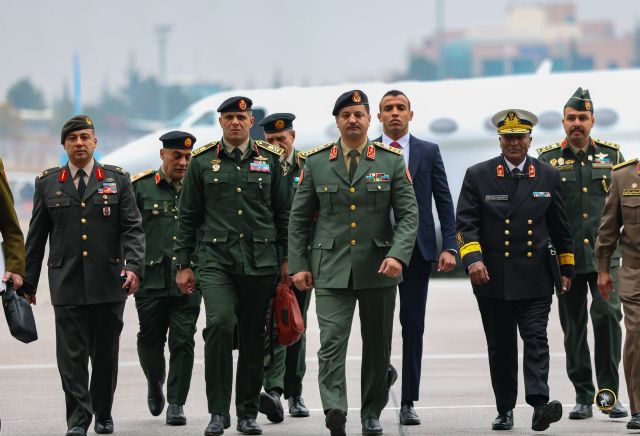
Lieutenant General Khaled Haftar, Chief of the General Staff of Libya's eastern-based military forces, has arrived in Türkiye for an official visit expected to last several days.
According to a report published by The Libya Update on November 12, 2026, the Libyan commander was welcomed by Turkish Armed Forces representatives.
The report identified General Hassan Kaya, described as representing the Turkish General Staff and serving in a military academies command role, among the officials receiving the delegation.
Several other Turkish military commanders were reportedly present.
The precise itinerary of the visit, the senior officials Haftar is scheduled to meet and any proposed agreements have not yet been detailed in a separate official announcement.
The visit comes amid increased Turkish engagement with the military leadership in eastern Libya and ongoing efforts to support cooperation between the country's divided military institutions.
Visit follows Turkish-Libyan military contacts
Khaled Haftar's reported arrival follows an important contact between the Turkish General Staff and Libya's eastern military command.
On November 11, Turkish Chief of General Staff General Selçuk Bayraktaroğlu held a telephone conversation with General Saddam Haftar, Deputy Commander of the eastern-based Libyan forces.
According to the Turkish General Staff, the two officials discussed bilateral relations and regional matters of mutual interest.
The conversation formed part of the continuing communication between Ankara and the eastern Libyan military leadership.
The subsequent report of Khaled Haftar's arrival in Türkiye adds another development to this sequence of high-level contacts.
However, no official statement has established whether the visit and the telephone conversation are part of a single coordinated programme.
Khaled Haftar recently held talks in France
Before the reported Türkiye visit, Khaled Haftar conducted a series of military and diplomatic meetings in France.
He arrived in Paris on November 3 for an official visit.
During meetings at the Élysée Palace, he held discussions with Paul Soler, the French president's special envoy for Libya, and General Vincent Giraud, the president's military chief of staff.
The talks addressed security cooperation, counterterrorism, irregular migration and developments in the Mediterranean.
On November 8, Haftar met French Chief of Defence Staff General Fabien Mandon.
Their discussions focused on military cooperation, professional training, the exchange of expertise and coordination on regional security matters.
The meetings reflected the continuing international engagement of eastern Libya's military command.
They also took place amid wider discussions concerning the possible unification of Libya's divided armed forces.
Türkiye expands training cooperation with Libyan personnel
Military education has become an increasingly important component of cooperation between Türkiye and Libya.
According to information released by the Turkish Ministry of National Defence, 362 Libyan military personnel from both eastern and western Libya completed a basic commando training programme in Türkiye between June 15 and September 4, 2026.
The programme was conducted under the responsibility of the Turkish Armed Forces' 40th Commando Training Brigade.
The training aimed to strengthen professional military capabilities and improve the operational preparedness of participating personnel.
Turkish officials have also confirmed that their military education programmes have included personnel from both sides of Libya's divided military structure.
This represents a significant development in Türkiye's approach to military cooperation with Libya.
While Ankara has maintained long-standing security relations with the Tripoli-based authorities, contacts and training programmes involving eastern forces have also increased.
However, no specific new military training arrangement has yet been announced in connection with Khaled Haftar's latest reported visit.
Military unification remains a central challenge
Libya continues to face institutional divisions between the military structures operating in the country's east and west.
The eastern-based Libyan National Army is commanded by Field Marshal Khalifa Haftar, while military forces aligned with the internationally recognized Government of National Unity operate under a separate command structure in western Libya.
Efforts to unify these institutions have included meetings between senior officers from both sides.
Khaled Haftar and Salah al-Din al-Namroush, Chief of the General Staff associated with the Tripoli authorities, participated in discussions in Luanda, Angola, in June 2026.
They later met in Sirte in July as part of consultations involving military representatives and international partners.
In September, technical meetings in Sirte addressed cooperation in training, joint exercises, military equipment, logistics and professional military education.
The United Nations Support Mission in Libya welcomed the contacts as confidence-building steps toward greater coordination.
Nevertheless, a unified national military command has not yet been established.
Any future integration process would require additional political agreements, institutional arrangements and cooperation between the existing military leaderships.
Ankara strengthens engagement with eastern Libya
Türkiye's relationship with eastern Libya has undergone a notable transformation.
During the 2019–2020 conflict, Ankara provided military support to the Tripoli-based government against an offensive launched by Khalifa Haftar's forces.
Since 2025, however, Türkiye has expanded direct political and military contacts with Benghazi while continuing its relationship with the authorities in western Libya.
Turkish Foreign Minister Hakan Fidan visited Benghazi on August 12, 2026, where he met Field Marshal Khalifa Haftar.
The meeting was attended by Deputy Commander Saddam Haftar and Chief of General Staff Khaled Haftar.
The discussions addressed bilateral relations, regional security and opportunities for cooperation.
Türkiye also reaffirmed its support for efforts to unify Libya's political and military institutions.
The diplomatic opening has coincided with increased interest in economic cooperation, reconstruction and maritime issues.
In October 2026, Libya's eastern-based House of Representatives approved the 2019 maritime jurisdiction agreement with Türkiye.
Khaled Haftar welcomed the parliamentary decision, presenting the maritime arrangement as important to protecting Libya's economic interests and offshore energy resources.
The latest military contacts therefore take place within a wider relationship involving political dialogue, security cooperation and economic interests.
Further details of Türkiye visit awaited
The reported arrival of Khaled Haftar in Türkiye represents another step in the growing contact between Ankara and the eastern Libyan military leadership.
However, the purpose of individual meetings, possible visits to military training institutions and the precise programme have not yet been publicly detailed.
There has also been no confirmed announcement of a new defense procurement agreement, military deployment or additional training contract arising from the visit.
The development comes shortly after Khaled Haftar's meetings in France and the November 11 telephone conversation between senior Turkish and Libyan military officials.
As Türkiye continues to engage with both eastern and western Libyan institutions, military training and the broader effort to establish unified national armed forces remain important subjects of bilateral and international cooperation.