Russian Warship Hit in Libya as Ukraine Link Emerges
A Russian Navy warship was heavily damaged in a drone attack at the Benghazi naval base in eastern Libya on November 22, with the Ukrainian Security Service (SBU) linked to the operation through a source cited by Axios. The vessel was identified as the Merkury missile corvette, while medical sources reported 10 injuries. A second drone attack later targeted a Maltese-flagged commercial ship off Benghazi, raising concerns about the expansion of the Russia-Ukraine conflict into the Mediterranean.
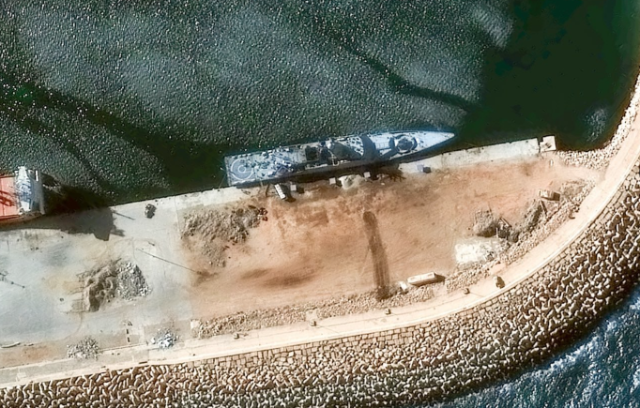
A Russian naval vessel was struck during a major drone attack at the Benghazi naval base in eastern Libya early on Sunday, November 22, 2026, triggering powerful explosions and a fire at the strategic Mediterranean port.
Libya's eastern-based government confirmed that preliminary investigations placed the explosion aboard a Russian ship docked at the naval installation.
The government said the available findings pointed to an attack involving unmanned vehicles.
Two Libyan military officials speaking to the Associated Press identified the damaged vessel as the Merkury, a Russian Navy missile corvette.
The officials said the vessel sustained severe damage during the attack.
The incident has drawn international attention after a source familiar with the operation told Axios journalist Barak Ravid that Ukraine's Security Service, known as the SBU, conducted a long-range strike against the Russian warship.
The developments raise new questions about the geographical reach of Ukrainian maritime operations and the security of Russian military assets operating in the Mediterranean.
Russian Navy's Merkury corvette reportedly damaged
The Merkury is a Steregushchiy-class corvette operated by the Russian Navy.
Warships of this class are designed for maritime patrol, escort missions, anti-ship operations and air defense.
They carry a range of naval weapons and electronic systems intended to support operations against maritime and aerial threats.
According to Libyan military officials cited by the Associated Press, the November 22 attack caused extensive damage to the vessel and started a fire at the Benghazi naval base.
However, the eastern Libyan government's official statement did not identify the ship by name.
No detailed Russian military assessment has been released confirming the full extent of damage or whether the warship remains operational.
Footage circulated online showed major explosions and flames rising from the port area.
Satellite imagery published by Reuters also captured smoke rising from the scene after the attack.
Russian vessel had stopped in Benghazi for supplies
In Statement No. 19 of 2026, Libya's eastern-based government said the Russian vessel had been returning to Russia when it stopped at Benghazi.
According to the statement, the ship entered the port to obtain fuel and supplies under maritime cooperation arrangements between Russia and the eastern Libyan authorities.
The government said emergency personnel brought the resulting fire under control and secured the site.
It added that port facilities, naval installations and storage facilities remained safe and that normal operations had resumed.
An investigation was launched in coordination with Russian authorities to establish the circumstances of the attack and identify those responsible.
Ten Russian and Libyan nationals injured
Medical sources in Benghazi told Reuters that 10 people were slightly injured in the incident.
The injured included both Russian and Libyan nationals, who received medical treatment in the city.
Emergency services, firefighters and security personnel were deployed to the naval base after the explosions.
Witnesses described hearing powerful blasts near the port, while some residents reported windows breaking in nearby buildings.
The authorities have not released a complete assessment of damage to the Russian vessel or a detailed breakdown of military personnel affected by the incident.
Reports describe six explosive drone boats
A source at the Benghazi naval base told Egyptian newspaper Youm7 that six explosive-laden unmanned surface vessels were involved in the operation.
According to the source, Libyan naval forces intercepted four of the incoming craft.
The remaining drone boats reportedly reached the area where the Russian vessel was docked.
The account provides additional detail about the possible method of attack, although the number of drones involved has not been independently established through an official technical investigation.
Later on Sunday, Libyan naval and air forces responded to another wave of unmanned vessels operating near the coast.
Two Libyan military sources told Reuters that more than 20 drone boats were intercepted off Benghazi during the evening.
Second vessel targeted off Benghazi
The attack on the Russian warship was followed by another maritime security incident off the Libyan coast.
According to Reuters, a Maltese-flagged commercial vessel was targeted by an unmanned surface vehicle near Benghazi.
Libyan naval forces subsequently rescued the crew members.
Local reports placed the incident near the Al-Sabri coastal district.
The vessel's identity, cargo and extent of damage were not immediately released.
The two incidents on the same day have increased concern over maritime traffic and the potential exposure of commercial shipping to military operations in the central Mediterranean.
Axios links strike to Ukraine's Security Service
Axios journalist Barak Ravid reported that a source familiar with the operation identified Ukraine's Security Service as the organization responsible for the long-range attack against the Russian warship.
The SBU has played an important role in Ukraine's campaign against Russian naval assets since Moscow launched its full-scale invasion in February 2022.
Ukrainian operations involving unmanned vessels and missiles have previously targeted Russian warships and military facilities in the Black Sea.
The reported operation in Benghazi would represent a further extension of such activities beyond the Black Sea theater.
Ukrainian authorities had not issued a detailed public statement formally claiming responsibility for the Benghazi strike at the time of the latest reports.
Previous attack on Arctic Metagaz LNG tanker
The new incident follows an earlier attack involving the Russian liquefied natural gas tanker Arctic Metagaz in the Mediterranean.
On March 3, 2026, the Russian-flagged vessel was severely damaged following explosions and a fire in waters between Libya and Malta.
Russian authorities accused Ukraine of conducting the operation using maritime drones launched from the Libyan coast.
All 30 crew members were rescued.
Although initial reports suggested the tanker had sunk, the damaged ship subsequently remained afloat and drifted through the Mediterranean.
Libyan authorities later began towing the vessel toward a safer area off the country's western coast.
Libya's National Oil Corporation coordinated with Italian energy company Eni to reduce the risk of an environmental disaster.
The Arctic Metagaz had been linked to Russia's so-called shadow fleet, a network of vessels associated with transporting energy exports under Western sanctions.
Unlike the March incident, which involved a commercial LNG carrier, the November 22 operation reportedly targeted a Russian naval corvette.
Ukrainian drone specialists reported in western Libya
The Associated Press has also reported the presence of Ukrainian personnel specializing in drone operations at military facilities in western Libya.
According to Libyan officials cited by the news agency, the personnel operated primarily from an air base in Misrata.
Other facilities in Tripoli and Zawiya were also reportedly used.
The officials connected Ukrainian operations in western Libya with the March attack against the Arctic Metagaz near Maltese waters.
The reported activities reflect the increasingly complex role of Libya in the wider strategic confrontation between Moscow and Kyiv.
Tripoli government warns against foreign conflicts
Libya's internationally recognized Government of National Unity, headed by Prime Minister Abdulhamid Dbeibah, expressed serious concern following the explosions in Benghazi.
In an official statement, the government rejected the use of Libyan territory, ports and territorial waters for military or logistical operations connected to foreign conflicts.
It warned that allowing unauthorized foreign military forces to operate through national facilities could expose Libya to dangerous international confrontations.
The government also emphasized the need to unify Libya's military institutions under a single national authority.
The eastern-based government of Osama Hammad separately condemned the attack against the Russian vessel, describing it as a violation of Libyan sovereignty and maritime security.
The eastern administration said Libya was not a party to the Russia-Ukraine war and insisted that its territory and ports should not become locations for settling international disputes.
Russian military presence in Libya under scrutiny
Russia has maintained extensive military and security relationships with eastern Libyan forces aligned with Khalifa Haftar.
Military bases and logistical installations across eastern Libya have served as important locations for Russian activities in the Mediterranean and Africa.
Benghazi's strategic position gives it significance for maritime operations, military transportation and regional supply routes.
The continued division between rival administrations in Tripoli and eastern Libya has allowed foreign powers to maintain relationships with separate Libyan political and military authorities.
The reported strike against the Merkury underscores the potential consequences of this international military presence.
The results of the joint Libyan-Russian investigation will be central to establishing the precise circumstances of the attack, the scale of damage to the vessel and any further implications for maritime security in the Mediterranean.