Somali Speaker Blasts Foreign-Backed Political Networks
Somalia's parliamentary speaker, Abdulkadir Mohamed Nur (Jaamac), has warned against foreign-backed political agendas, explicitly referring to the United Arab Emirates while urging Somalis to resist external interference and defend their country's independence.
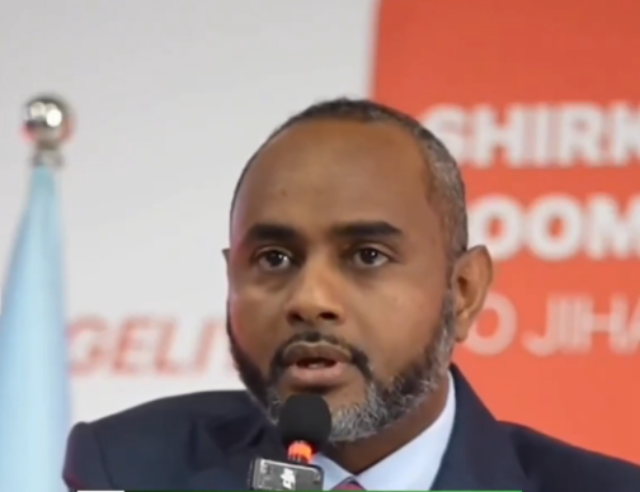
UAE mentioned amid warnings about external influence
Somalia's Speaker of the House of the People, Abdulkadir Mohamed Nur, has delivered a forceful message against what he described as foreign efforts to influence the country's political future.
In a recorded speech, Jaamac referred explicitly to the United Arab Emirates while warning against political projects he believes are intended to weaken Somalia.
The speaker argued that external actors could use different individuals and political networks to advance objectives contrary to Somalia's national interests.
He also made sweeping accusatory references to Jews while discussing foreign influence. Those remarks formed part of his political rhetoric rather than establishing the conduct of any particular government or community.
Jaamac urged Somali citizens to examine the interests behind political arrangements that could undermine the country's independence.
Diplomatic dispute between Somalia and the UAE
The remarks come against the backdrop of a major deterioration in relations between Mogadishu and Abu Dhabi.
On November 19, 2026, Somalia ordered the United Arab Emirates ambassador to leave the country within 72 hours and recalled its own ambassador from Abu Dhabi for consultations.
Somali officials accused the UAE of violating the country's sovereignty and interfering in domestic political affairs.
President Hassan Sheikh Mohamud had previously accused the Emirates of providing political and economic support to regional administrations in ways that challenged the federal government's authority.
Abu Dhabi rejected Somalia's accusations, describing the government's approach as hostile and escalatory. The UAE also criticized attempts to involve it in Somalia's domestic political disputes.
The parliamentary speaker's comments added another prominent voice to the debate over foreign involvement and the future of Somalia's relations with external partners.
Warning against modern forms of colonialism
A central theme of Jaamac's address was his concern that foreign domination could emerge through different political methods and appearances.
He argued that the name or outward presentation of colonial influence was less important than its potential consequences for national independence.
The speaker cautioned that political arrangements presented under different labels could still undermine the country's sovereignty.
He encouraged Somali citizens to assess such developments based on their consequences for Somalia rather than the identities or descriptions of the actors involved.
Recognition of journalists and civil society
Jaamac also acknowledged the role played by Somali journalists, artists, religious scholars and members of the public in raising awareness about threats to national independence.
He praised media professionals for bringing attention to the consequences of external interference and for examining its possible effects on Somalia.
The speaker similarly recognized artists and religious figures who had addressed questions of sovereignty and political independence through public statements and other forms of communication.
He described growing public awareness as an important part of the country's response to foreign political influence.
National unity placed at the center of the message
Addressing the Somali public, Jaamac warned that political developments which appear limited in significance today could have lasting implications for future generations.
He stressed that the country's interests should take precedence over outside agendas and urged citizens to remain attentive to attempts to weaken national unity.
The parliamentary speaker called for a common national response to external interference, regardless of the individuals or political interests involved.
His address reflects the increasingly prominent debate in Somalia over sovereignty, foreign partnerships and the protection of national institutions as diplomatic tensions with the UAE continue.