Somalia Details UAE Flights and Colombian Fighters in Bosaso
Somalia's national media has released an investigative video detailing how aircraft chartered by the United Arab Emirates allegedly operated hundreds of unauthorized flights through Bosaso Airport while transporting Colombian fighters linked to Sudan's Rapid Support Forces (RSF). The investigation also describes the use of Qatar-donated buses, a UAE military facility, shipments of weapons through Bosaso Port and routes connecting Somalia to Chad, Sudan and Libya. Somali aviation authorities reported 668 unauthorized flights in 2025 and 301 in 2024.
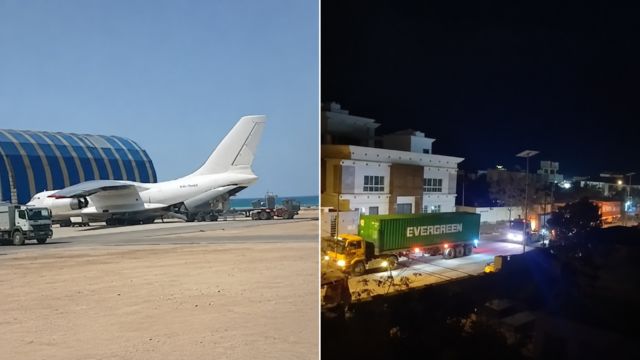
Aviation records reveal operations through Bosaso
A video investigation broadcast by Somalia's national media has presented detailed aviation records alongside footage of foreign personnel and military logistics activities in Bosaso, northeastern Somalia.
The approximately five-minute documentary focuses on the use of Bosaso Airport and Port in a network that Somali authorities say supported the movement of Colombian fighters and military equipment toward Sudan.
At the center of the investigation are aircraft allegedly chartered by the United Arab Emirates and operated without permission from Somalia's federal aviation authorities.
The video contains airport footage, transport vehicles, images of cargo vessels, military facilities, maps and tables listing aircraft movements.
According to the investigation, Bosaso became a key transit point for foreign personnel and equipment associated with the conflict involving Sudan's Rapid Support Forces.
Somalia reports more than 984 unauthorized flights
The documentary states that UAE-chartered aircraft conducted more than 984 unauthorized flights connected to the movement of Colombian personnel during 2024 and 2025.
Somalia's Civil Aviation Authority separately provided annual figures for flights recorded as violating the country's airspace regulations.
It reported 668 unauthorized flights in 2025 and 301 in 2024.
The two annual figures produce a combined total of 969 flights, while the documentary also refers to more than 984.
No explanation was provided for the difference between the overall figure and the two annual counts.
Somali authorities said the aircraft operated from Bosaso without obtaining the necessary authorization from the federal government.
The documentary presents these flights as part of a broader pattern of unauthorized use of Somalia's aviation infrastructure.
Cargo airlines identified in flight records
The aviation section features tables containing flight dates, aircraft registrations, operators, aircraft types and airport codes.
Some records refer to Ilyushin IL-76 heavy cargo aircraft, which are designed to transport substantial loads over long distances.
Among the operators identified in the material are RubyStar, Aviacon Zitotrans, Aerostan and Abakan.
Other charter operators are also named in the documentary.
The video states that companies contracted by the UAE conducted flights that Somali authorities recorded as violations of national airspace.
The records are presented as evidence of aircraft movements, although their inclusion does not independently establish the contents of every flight or the knowledge of every operator regarding its passengers and cargo.
More than 6,000 Colombians reportedly moved through the airport
The investigation also provides figures on foreign fighters passing through Bosaso.
According to information attributed to Somali security agencies, more than 6,000 Colombian mercenaries were transported through Bosaso Airport after the war in Sudan began in April 2023.
The documentary describes the personnel arriving as civilians, without military uniforms or visible weapons.
Footage shows men seated inside a building with personal belongings and bags nearby.
Somali authorities said the individuals did not display identifying military characteristics when they first arrived.
The investigation maintains that the civilian appearance of the travelers concealed their intended deployment to operations linked to the RSF.
The total of more than 6,000 is presented as a figure from Somali security agencies rather than a separately verified count of individual recruits.
Buses donated by Qatar diverted to military transport
Another part of the documentary examines transport arrangements following the arrival of the Colombian personnel.
According to the video, buses that Qatar had donated to Somalia were subsequently transferred to the Puntland administration for public use.
Somali national media reported that these vehicles were instead used to transport Colombian personnel from Bosaso Airport to a UAE military facility in the city.
The investigation presents the arrangement as an example of civilian resources being used for military logistics.
Images associated with the passengers' movement are included in the video.
The report does not establish that Qatar authorized or participated in the alleged military use of the donated vehicles.
Colombian personnel appeared alongside Puntland forces
The documentary includes photographs and footage showing foreign personnel in the company of uniformed members of the Puntland security forces.
Somali national media said the Colombians were publicly presented as trainers.
The investigation disputes that description, maintaining that their presence in Bosaso was connected to the movement of fighters toward Sudan.
The footage shows groups of men in military-style clothing and personnel gathered together in outdoor settings.
According to Somali authorities, the public explanation of their presence did not reflect the full purpose of their activities in Bosaso.
The report links these personnel movements to the wider alleged transport network through the airport and nearby military installations.
Fighters reportedly received monthly payments of $4,000
Financial arrangements involving the Colombian personnel were also addressed.
The documentary states that reports indicated each Colombian mercenary received a monthly salary of approximately $4,000.
It further states that the payments were believed to be funded by the UAE government.
The information was presented in connection with the recruitment, movement and deployment of foreign personnel.
The video did not display complete individual employment contracts or banking records establishing the same payment arrangements for every person mentioned.
Weapons allegedly arrived through Bosaso Port
The investigation also examines the maritime side of the alleged supply network.
Somali national media reported that large cargo ships docked at Bosaso Port carrying containers with unauthorized shipments of weapons and military equipment.
Video footage shows vessels at port facilities, loading operations and containers.
According to the investigation, the maritime shipments formed another component of the logistics system supporting the movement of military supplies toward Sudan.
The video links the port activities to the transport of foreign fighters through the airport.
While the footage shows port operations, a complete manifest of the alleged weapons shipments was not published in the documentary.
Transit routes linked Somalia, Chad, Sudan and Libya
Maps displayed in the video identify several destinations associated with the reported movement of personnel and equipment.
The locations include Amdjarass in Chad, Nyala in Sudan's Darfur region and Kufra in southeastern Libya.
Somali national media described these destinations as part of routes used to transfer mercenaries and military supplies from Bosaso toward areas connected to Sudan's conflict.
Nyala has served as a major RSF center in Darfur, while Kufra is connected to cross-border routes linking Libya, Chad and Sudan.
The documentary states that foreign personnel moved through these locations before participating in fighting alongside armed groups opposing the Sudanese government.
It does not provide a complete itinerary or individual transport record for every reported movement.
Federal government highlights airspace violations
The concluding section of the video returns to Somalia's aviation records.
Somali authorities emphasized that international charter operations require authorization from the federal government and that unauthorized flights constitute violations of the country's control over its airspace.
The Civil Aviation Authority's figures for 2024 and 2025 were displayed alongside images of aviation monitoring facilities and flight data.
The investigation presents the movement of Colombian personnel, the use of buses, the alleged military shipments through Bosaso Port and the aircraft operations as interconnected activities.
Somalia's national media said the dossier documents the use of Bosaso as a transit location for a foreign military supply network associated with Sudan's continuing conflict.
The UAE has denied supporting the RSF with arms or organizing the movement of mercenaries for Sudan's war.