Somalia Faces Security Handover as Uganda Starts Exit
Somalia faces a new phase in its security transition after Uganda confirmed that troops deployed under a bilateral agreement with Mogadishu have begun returning home. Colonel Chris Magezi, Uganda's Acting Director of Defence Public Information, announced on November 2 that the bilateral withdrawal would be completed within days, while Ugandan personnel serving under the African Union Support and Stabilisation Mission in Somalia (AUSSOM) would leave gradually by the end of 2027. The decision places renewed attention on the Somali National Army's ability to protect territory recovered from Al-Shabaab, particularly in the strategically important Lower Shabelle region.
The withdrawal of Ugandan troops from Somalia has brought the future of security operations in Lower Shabelle back into focus as Somali forces prepare to assume greater responsibility for areas previously supported by foreign military contingents.
Uganda's Defence Ministry confirmed on Monday, November 2, 2026, that its forces deployed under bilateral security arrangements with the Federal Government of Somalia had begun returning to Uganda.
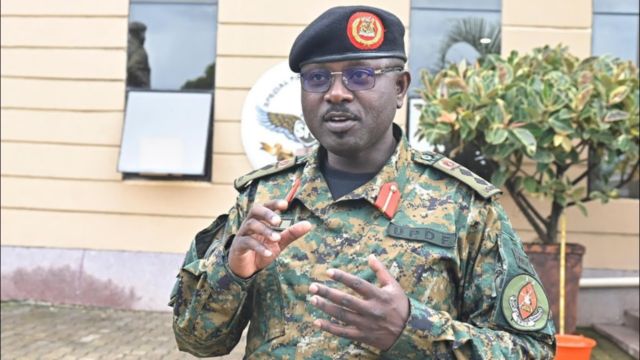
Colonel Chris Magezi, Acting Director of Defence Public Information at the Uganda People's Defence Forces (UPDF), said the first group of soldiers had already arrived home.
The bilateral deployment will be withdrawn within the next few days, while Uganda's African Union contingent will remain subject to a longer transition.
The official plan establishes the end of 2027 as the deadline for the departure of all Ugandan military personnel from Somalia.
For Mogadishu, the announcement raises questions about how recovered territory, strategic roads and military positions will be protected as the foreign troop presence decreases.
Lower Shabelle Becomes Central to Security Transition
Lower Shabelle has been one of the main operational areas for Ugandan forces supporting Somalia's campaign against Al-Shabaab.
The region connects Mogadishu with important agricultural areas, transport corridors and military positions to the south.
Uganda has maintained troops there under both the African Union mission and separate bilateral arrangements with the Somali government.
According to The EastAfrican, the additional bilateral contingent was deployed to reinforce operations around strategic locations including Sabiid-Anole, Bariire and Awdhegle.
These operations were intended to remove Al-Shabaab fighters from key positions and facilitate the transfer of security responsibilities to Somali forces.
However, maintaining control of recovered territory has required continued military support.
The withdrawal therefore brings renewed attention to whether Somali security institutions can independently secure positions previously supported by Ugandan troops.
The Ugandan Defence Ministry has not specified which bases will be vacated first or which Somali units will assume responsibility for individual positions.
Previous Joint Operations Highlight Areas of Responsibility
One example of cooperation between Ugandan and Somali forces took place in June 2025.
AUSSOM announced that Ugandan troops and the Somali National Armed Forces had recaptured Sabiid and Anole during a joint operation known as Operation Silent Storm.
The mission said the operation involved clearing militant positions, recovering ammunition and removing improvised explosive devices from populated areas and supply routes.
Following the operation, troops remained involved in securing the recovered locations.
AUSSOM officials described the operation as part of Somalia's broader transition toward national responsibility for security.
The latest Ugandan withdrawal plan makes that process increasingly relevant.
However, there has been no new official announcement identifying a definite transfer date for Sabiid-Anole or other specific positions.
Protecting Supply Routes Will Be Another Challenge
Maintaining security in Lower Shabelle also requires control of roads connecting military bases and civilian communities.
In March 2026, AUSSOM reported that Ugandan and Somali forces had undertaken a joint operation to repair and secure the main supply route connecting Mubarak, Darusalam and Awdhegle.
Military engineers removed obstacles, cleared vegetation and rehabilitated damaged sections of the road.
The work was intended to improve military movement and protect access to essential services.
AUSSOM said the restored route also improved civilians' ability to reach markets, healthcare facilities and other destinations.
Such operations demonstrate that securing recovered territory involves more than controlling individual towns.
Somali forces will need to maintain road security, protect military supply movements and prevent renewed attacks against communities and infrastructure.
The success of the transition will therefore depend on logistics, engineering capabilities, intelligence and coordination with local authorities.
Uganda's Bilateral Troops and AUSSOM Forces Have Different Timetables
The November 2 statement makes an important distinction between Uganda's two categories of deployed forces.
Soldiers assigned under the bilateral agreement with Somalia are being withdrawn immediately.
Ugandan troops serving within AUSSOM will instead leave through a phased process scheduled to conclude by the end of 2027.
The distinction helps explain why Uganda continued preparations for new African Union deployments shortly before announcing the withdrawal.
On October 30, the UPDF held a ceremony for Battle Group 48 following its pre-deployment training at the International Peace Support Operations Training Centre in Singo.
Major General Felix Busizoori addressed the departing personnel, emphasizing discipline, teamwork and operational responsibilities.
Colonel Michael Opio Ochuka was named commander of the battle group.
These preparations concern Uganda's continuing role under AUSSOM, rather than the bilateral contingent now being withdrawn.
The Ugandan national withdrawal schedule also should not be confused with the timeline for the departure of every country contributing troops to AUSSOM.
The African Union's wider transition arrangements envisage security assessments and a gradual handover linked to conditions on the ground.
Somali Military Readiness Remains a Key Factor
Somalia has made the development of its national security forces a major component of its long-term stabilisation strategy.
However, Al-Shabaab remains active in parts of southern and central Somalia.
The ability to recover territory is only one element of military operations.
Holding recovered areas also requires functioning command structures, sufficient personnel, reliable supplies and cooperation with local institutions.
In September, Somali National Security Adviser Ambassador Aweys Haji Yusuf said the departure of African Union forces should be based on assessments of the Somali military's readiness.
He emphasized a planned rather than abrupt transition.
Uganda's announcement indicates that one part of that transition has now entered the implementation stage.
Nevertheless, Mogadishu has not publicly issued a comprehensive new deployment plan detailing how every withdrawing bilateral Ugandan unit will be replaced.
International Funding Adds Pressure to the Mission
The troop withdrawal comes amid continued uncertainty over financing for African Union operations in Somalia.
AUSSOM relies on international arrangements to provide vital logistical services, including transport, fuel, medical support and supplies.
The United Nations Support Office in Somalia (UNSOS) has been a central part of that support system.
According to Reuters reporting published on September 18, the United States agreed to support an additional 12-month period for the gradual withdrawal of UNSOS logistical assistance, providing more time for discussions over alternative funding arrangements.
The decision reduced the immediate risk of a sudden interruption but did not resolve the longer-term financial challenges.
During meetings in Kampala in July, African Union troop-contributing countries discussed the need for sustainable funding and stronger Somali security institutions.
Uganda's November statement, however, did not identify financial pressure as the sole reason for the withdrawal.
Instead, the military presented the move as the conclusion of a long peace support deployment and the transfer of responsibility to Somali forces.
Somali President Had Requested More Time
The withdrawal timetable was announced one week after Somali President Hassan Sheikh Mohamud visited Uganda.
On October 26, Mohamud met President Yoweri Museveni at State House in Entebbe.
According to the Ugandan presidency, the talks focused on Somalia's security challenges, military cooperation and the campaign against Al-Shabaab.
Mohamud thanked Uganda for its longstanding contribution to Somalia's stabilisation efforts.
He also expressed hope that Ugandan troops would remain longer to support security operations.
Museveni emphasized the importance of political unity in addressing Somalia's security challenges.
No new agreement extending the Ugandan deployment was announced after the meeting.
The formal withdrawal plan released on November 2 therefore represents a significant development in the bilateral security relationship.
A New Test for Somalia's National Security Institutions
Uganda began deploying troops to Somalia in 2007 and became one of the longest-serving contributors to successive African Union missions.
Its soldiers supported operations in Mogadishu, Lower Shabelle and other strategically important areas.
The deployment continued through AMISOM, ATMIS and the current AUSSOM mission.
The new withdrawal timetable establishes a planned endpoint to Uganda's nearly two-decade military presence.
For Somalia, however, the transition is not simply about replacing foreign personnel with national troops.
It involves maintaining control of recovered territory, ensuring the continuity of military operations and strengthening the institutions responsible for long-term security.
Under the official announcement issued by Colonel Chris Magezi, Uganda's bilateral troops are already leaving, while its remaining AUSSOM forces are scheduled to depart by the close of 2027.
The coming transition will place Somalia's security institutions at the centre of efforts to sustain military gains and prevent Al-Shabaab from re-establishing itself in previously recovered areas.