Sudan Presses African States to Block RSF Supply Routes
Sudan has urged African governments to prevent weapons, foreign mercenaries and military supplies from reaching the Rapid Support Forces (RSF) through their territories. Speaking at the 22nd Executive Council meeting of the Community of Sahel-Saharan States (CEN-SAD) in Tripoli, Sudanese Foreign Ministry Undersecretary Muawiya Othman Khalid called for stronger action against the paramilitary group's external support networks. Khartoum's authorities also requested a terrorist designation for the RSF as international investigations continue to uncover cross-border recruitment and military supply operations linked to the Sudanese conflict.
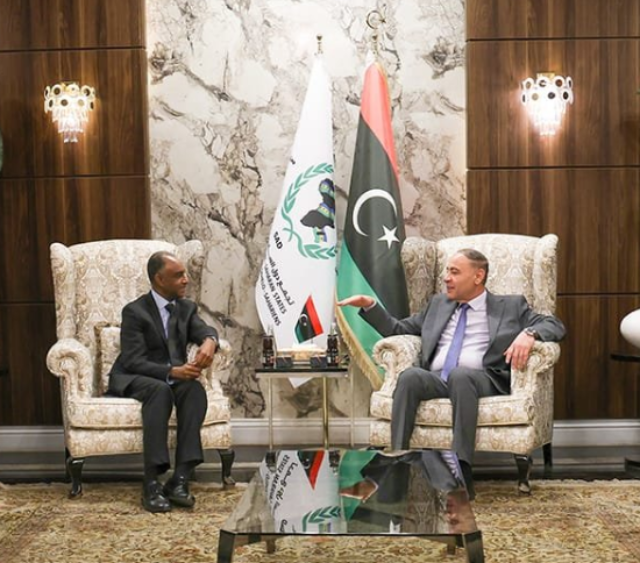
Sudan has intensified its diplomatic campaign against the Rapid Support Forces by calling on African governments to restrict the international networks supplying weapons, personnel and logistical assistance to the paramilitary organization.
The appeal was delivered in Tripoli on November 7 by Ambassador Muawiya Othman Khalid, Undersecretary of Sudan's Ministry of Foreign Affairs and International Cooperation.
Khalid led Sudan's delegation to the 22nd Ordinary Session of the Executive Council of the Community of Sahel-Saharan States (CEN-SAD).
The Sudanese representative called on member countries to prevent their territories from being used for the transit of military equipment, foreign mercenaries and logistical supplies destined for the RSF.
He also urged participating governments to condemn atrocities attributed to the group and support its designation as a terrorist organization.
The demands reflect Sudan's efforts to move the conflict's international dimensions onto the agenda of African regional institutions.
Sudan Seeks Action Against Cross-Border Military Networks
The central focus of Sudan's appeal was the movement of military resources across national boundaries.
Khalid argued that the RSF's continuing operations were being sustained by external assistance and called for stronger regional measures to restrict those connections.
His demands went beyond political condemnation, focusing on the need to prevent weapons and fighters from passing through the territories of CEN-SAD member states.
Sudan has repeatedly argued that foreign military assistance has contributed to the prolongation of the conflict.
The movement of weapons, specialized equipment and personnel through international transport networks has also become a subject of United Nations investigations.
For Sudanese authorities, closer cooperation among African governments could play an important role in restricting such movements.
However, the Tripoli meeting did not announce a new joint border operation or enforcement mechanism specifically targeting RSF-linked supply routes.
UN Investigations Identify International Support Networks
The Sudanese appeal comes amid growing international documentation of the RSF's foreign military connections.
In September 2026, the UN Independent International Fact-Finding Mission for Sudan presented findings concerning a transnational network involved in supporting RSF operations.
Investigators found reasonable grounds to believe that individuals and entities operating through several countries had facilitated the transfer of weapons, drone-related technology, logistical assistance and personnel into RSF-controlled territory.
The investigation identified links involving the United Arab Emirates, Chad, southeastern Libya and Puntland in Somalia.
Nyala, the capital of South Darfur, emerged as an important destination for supplies and personnel associated with the network.
The mission also documented the involvement of former Colombian military personnel in operating and maintaining drones and training RSF members.
These findings highlighted the increasingly international nature of Sudan's conflict.
They did not establish that every government or institution located along the identified routes was responsible for the activities of the individuals and companies involved.
UN Sanctions Target Colombian Recruitment and Financing
International measures against the RSF's foreign military connections expanded in April 2026.
On April 28, the UN Security Council's Sudan Sanctions Committee listed individuals associated with the recruitment and financing of Colombian fighters deployed to Sudan.
Among them was Álvaro Andrés Quijano Becerra, identified by the committee as a central figure in recruiting former Colombian military personnel.
According to the UN designation, the recruitment network sought specialists including drone operators, snipers and translators.
The committee also documented the participation of Colombian fighters in RSF military operations as infantry personnel, artillery operators, vehicle crews, drone specialists and instructors.
Another listed individual, Mateo Andrés Duque Botero, was identified as having played a central role in financing the foreign personnel.
The UN described financial transactions and payment arrangements associated with companies involved in the recruitment network.
The listings show that international sanctions have targeted specific individuals connected to foreign military operations in Sudan.
They are distinct from Sudan's separate request for a regional terrorist designation of the RSF itself.
Darfur Atrocities Strengthen Sudan's Diplomatic Demands
In his address, Khalid accused the RSF and foreign fighters of committing serious violations against civilians.
He referred to ethnic cleansing, systematic starvation and attacks on essential infrastructure and cultural heritage.
The accusations were presented as evidence of what Sudanese authorities consider an existential threat to the state.
International human rights investigations have documented widespread atrocities in Darfur, including attacks on civilian communities, sexual violence, forced displacement and other grave abuses.
The RSF's takeover of El Fasher in October 2025 became a major focus of international investigations into mass killings and violations of international humanitarian law.
UN investigators have also identified evidence of foreign military personnel participating in operations associated with the conflict in Darfur.
Sudan's latest diplomatic demands seek to translate these concerns into stronger regional action against the group.
However, criminal accountability for individual violations and the formal designation of an organization as terrorist involve different legal and institutional procedures.
Sudan Accuses Regional Powers of Sustaining the War
Khalid also accused unnamed regional powers of helping to prolong Sudan's conflict.
He argued that external assistance had enabled the RSF to sustain military operations and contributed to the destruction of national institutions.
The Sudanese representative described damage to vital facilities and cultural heritage as part of the broader consequences of the fighting.
He called on regional governments to recognize the seriousness of the war and prevent further external assistance from reaching the paramilitary group.
His remarks did not publicly name a specific foreign government as responsible for the activities described in the speech.
Sudan has separately raised allegations concerning foreign involvement in the conflict through international diplomatic channels.
The UAE has denied accusations that it provides military support to the RSF.
CEN-SAD Provides a Regional Framework for Sudan
The Community of Sahel-Saharan States was founded in Tripoli in 1998 to promote cooperation among African countries.
The organization currently brings together 25 member states from several regions of the continent.
Its membership includes Sudan, Libya, Chad, Niger, Mali, Egypt, Somalia and Djibouti.
The geographical reach of CEN-SAD makes it a relevant forum for discussing border security, transnational criminal activity and regional military threats.
For Sudan, the organization offers an opportunity to raise concerns about weapons trafficking and the movement of foreign fighters before governments that participate in regional transport and security networks.
The bloc also maintains broader objectives related to political coordination, economic integration and development.
Sudan's appeal therefore linked its immediate security demands with the organization's wider regional responsibilities.
The participation of member states in the meeting, however, does not mean that all governments endorsed Sudan's specific proposal.
Tripoli Meeting Focuses on Reviving Regional Institutions
The 22nd Executive Council meeting also produced decisions concerning the future of CEN-SAD itself.
Libyan Prime Minister Abdulhamid Dbeibah opened the session, which brought together foreign ministers and senior officials from participating countries.
At the conclusion of the meeting, Chadian Foreign Minister Ahmed Kougri and Libya's Acting Foreign Minister Taher Al-Baour signed the final document.
The council approved the appointment of an interim executive secretary for a four-month term.
Member states also agreed in principle to return the organization's Executive Secretariat to its headquarters in Tripoli.
The arrangement is expected to be submitted to the next summit of heads of state and government, planned for N'Djamena in 2027.
Other decisions addressed institutional reform, economic cooperation, political consultation and coordination against terrorism, organized crime and irregular migration.
Despite these broader outcomes, the council did not publicly announce the designation of the RSF as a terrorist organization.
Sudan's Request Remains a Diplomatic Proposal
Sudan's intervention at the CEN-SAD meeting brought together two objectives: restricting the external military networks supporting the RSF and seeking regional recognition of the group's alleged responsibility for grave abuses.
The government is calling on African states to prevent weapons, foreign fighters and logistical supplies from reaching the paramilitary organization.
International investigations have already documented recruitment networks, financial arrangements and cross-border activities connected to RSF operations.
However, the adoption of institutional reform and regional security decisions by CEN-SAD does not amount to approval of Sudan's requested terrorist designation.
No collective decision establishing new RSF-specific sanctions or restrictions was announced following the session.
The next stage will depend on whether individual governments or regional institutions take further action in response to Sudan's demands.
The Tripoli appeal illustrates how Sudan's conflict continues to influence African diplomatic relations, with border security, foreign military support and accountability becoming increasingly important issues beyond the country's borders.