Uganda Signs Sh232bn Deal for Kabalega Airport Terminal
Uganda has signed a UGX 232 billion contract with Egyptian construction company SAMCO National Construction to build a new passenger terminal at Kabalega International Airport in Hoima District. The eight-month project forms the second phase of the airport's development and is intended to expand passenger transport capacity beyond the facility's original oil and gas logistics role. The investment also forms part of Uganda's wider infrastructure preparations ahead of the 2027 Africa Cup of Nations.
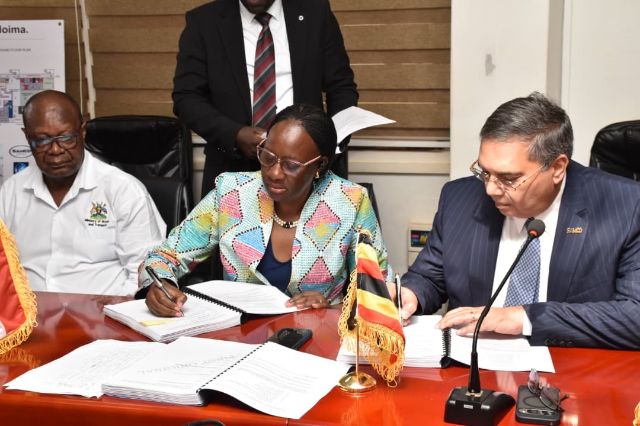
Uganda has taken another step toward expanding its international aviation infrastructure with the signing of a major passenger terminal construction agreement for Kabalega International Airport.
The government concluded a UGX 232 billion contract with Egyptian company SAMCO National Construction on October 30, 2026.
The signing ceremony took place at the Ministry of Works and Transport in Kampala.
Ugandan Minister of State for Transport Fred Byamukama attended alongside Egyptian Ambassador Sherif Mohamed Abdellattif Elgammal and representatives of the Uganda Civil Aviation Authority and other government institutions.
The agreement covers construction of the passenger terminal under the second phase of the airport's development.
The government expects the project to improve air connectivity, support tourism and contribute to economic activities in western Uganda.
SAMCO Given Eight Months to Complete Terminal
Under the contract, the Egyptian construction company is expected to deliver the new passenger terminal within eight months.
SAMCO Vice-Chairman Engineer Ibrahim Mabrouk expressed the company's commitment to completing the project within the agreed timetable.
Ugandan officials emphasized the importance of accelerating work on the terminal and coordinating the remaining implementation requirements.
The Ministry of Works and Transport and the Uganda Civil Aviation Authority will play important roles in technical supervision and regulatory preparations.
The new building will need to meet aviation safety, security and passenger-handling requirements before it can become fully operational.
The eight-month deadline applies to the construction project and does not constitute confirmation that regular international passenger services have already begun.
New Contract Follows Earlier Construction Arrangements
Uganda Broadcasting Corporation reported that the new agreement replaces an earlier terminal construction budget associated with China Communications Construction Company.
The previous budget was reported at UGX 285 billion, compared with the new contract value of UGX 232 billion.
The difference between the two figures amounts to UGX 53 billion.
However, the full technical details required to establish whether the earlier and current contracts cover identical construction scopes have not been publicly disclosed.
As a result, the difference should not automatically be described as a confirmed net saving.
Ugandan authorities expect the revised contractual arrangement to accelerate completion of the passenger facilities.
Airport Originally Developed for Oil Industry
Kabalega International Airport was initially conceived as an aviation facility serving the oil and gas industry in Uganda's Albertine region.
Construction began in 2018, with the airport designed to support the movement of heavy equipment, technical materials and other cargo associated with petroleum development.
The facility includes a 3.5-kilometre runway and infrastructure intended for cargo operations.
As regional economic priorities expanded, the government began developing plans for wider commercial aviation use.
The second phase of construction is intended to provide passenger facilities that complement the existing airport infrastructure.
A fully developed passenger terminal could strengthen connections between Hoima, other parts of Uganda and international markets.
However, the actual scale of future passenger operations will depend on regulatory approval, airline interest and the completion of supporting facilities.
First Passenger Aircraft Lands During Testing
Uganda's Ministry of Works and Transport announced in October that Kabalega International Airport had received its first passenger aircraft during a successful test flight.
Minister Fred Byamukama said the exercise demonstrated progress in assessing the airport's operational systems.
According to the ministry, the first phase of the airport's development had reached approximately 99 percent completion.
This figure relates to the earlier phase of the project, rather than the newly contracted passenger terminal.
The government has continued carrying out testing and final works before the facility can begin regular commercial operations.
The successful aircraft landing therefore represents progress in operational readiness but not the formal opening of the new terminal.
AFCON 2027 Adds Importance to Project
Uganda is preparing to co-host the 2027 Africa Cup of Nations alongside Kenya and Tanzania.
The tournament is expected to generate demand for international travel, regional transport and tourism services.
The Kabalega passenger terminal project is being developed as part of wider efforts to improve aviation infrastructure ahead of the event.
Improved facilities in Hoima could support the movement of visitors, officials and sports delegations to western Uganda.
The infrastructure is also intended to serve commercial and tourism activities beyond the tournament.
Nevertheless, the specific use of the airport during AFCON 2027 will depend on tournament logistics, airport readiness and airline arrangements.
Economic Opportunities for the Albertine Region
Kabalega International Airport is located in an area of strategic economic importance for Uganda.
The Albertine region hosts petroleum developments and has potential for wider investment in tourism, trade and related services.
The introduction of a larger passenger terminal could improve access for business travellers and investors.
The government expects better aviation connectivity to support tourism and commercial growth in Hoima and surrounding districts.
However, measurable economic benefits will depend on the volume of future air traffic, available routes and the capacity of local infrastructure to support additional demand.
Uganda and Egypt Expand Infrastructure Cooperation
The contract also adds a new dimension to economic cooperation between Uganda and Egypt.
The involvement of an Egyptian construction company and senior diplomatic representatives reflects the bilateral significance attached to the investment.
Officials from both countries have emphasized the importance of completing the project within the agreed construction timetable.
For Uganda, the immediate priorities are to implement the contract, complete the passenger facilities and secure the approvals required for commercial aviation operations.
For SAMCO, the agreement represents a major construction assignment in Uganda's expanding transport infrastructure sector.
The progress of the eight-month project will be an important measure of the government's efforts to turn Kabalega into a broader international aviation facility.